
The Ultimate Guide to Skin Barrier Repair: 15 Science-Backed Ways to Restore Healthy Skin Fast
Quick Answer
Skin barrier repair is the process of restoring your skin’s protective outer layer after it has been damaged by over-exfoliation, harsh skincare products, UV exposure, or environmental stress. Mild damage may heal within 1–2 weeks, while severe cases can take 6–12 weeks. The most effective ingredients include ceramides, niacinamide, glycerin, cholesterol, panthenol, and sunscreen.
If your skin suddenly feels dry, tight, red, sensitive, or starts breaking out after using products that once worked perfectly, your skin barrier may be damaged.
Fortunately, skin barrier repair is possible. With the right skincare ingredients, a gentle routine, and patience, your skin can recover and become healthier than before.
Your skin barrier is your body’s first line of defense against pollution, bacteria, UV radiation, allergens, and water loss. When this protective shield becomes compromised, even healthy skin can become irritated and dehydrated.
In this comprehensive guide, you’ll learn everything about skin barrier repair, including:
- What the skin barrier actually is
- Common causes of skin barrier damage
- Early warning signs
- The best science-backed ingredients
- A dermatologist-inspired skincare routine
- Recovery timeline
- Signs your skin barrier is healing
- Common mistakes that delay healing
- Frequently asked questions
Whether you’re dealing with over-exfoliation, retinol irritation, environmental damage, or chronic sensitivity, this guide will help you restore your skin barrier safely and effectively.
This is islandbeautyr.com, and I am Rasta Kafashan, the author of this website. I can help you better understand and become more aware of your skin, based on the most up-to-date scientific research. So, stay with us and follow islandbeautyr.com.
What Is the Skin Barrier?
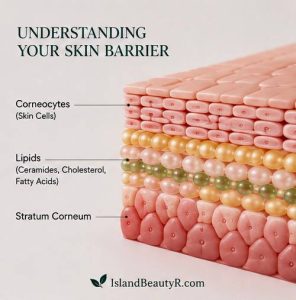
The skin barrier, also called the stratum corneum, is the outermost layer of your skin. Although only a fraction of a millimeter thick, it plays one of the most important roles in keeping your skin healthy.
Think of it as a brick wall.
- The skin cells (corneocytes) are the bricks.
- Natural lipids—including ceramides, cholesterol, and fatty acids—act as the mortar holding those bricks together.
This unique structure allows your skin to:
- Lock moisture inside
- Prevent excessive water loss
- Keep harmful microorganisms out
- Protect against pollution and irritants
- Reduce inflammation
- Support healthy skin renewal
A healthy skin barrier constantly repairs itself, but excessive stress can overwhelm its natural healing process.
Skin Barrier Components
| Component | Function |
|---|---|
| Corneocytes | Create the physical barrier |
| Ceramides | Prevent moisture loss |
| Cholesterol | Maintain lipid balance |
| Fatty Acids | Improve flexibility |
| Natural Moisturizing Factors | Retain water |
Why Is the Skin Barrier So Important?
Many people believe moisturizers alone keep skin hydrated. In reality, hydration depends largely on the condition of your skin barrier.
A strong skin barrier helps maintain:
Healthy Hydration
The barrier prevents transepidermal water loss (TEWL), ensuring your skin stays hydrated, plump, and comfortable throughout the day.
Protection Against Irritants
Every day your skin encounters:
- Air pollution
- UV radiation
- Allergens
- Bacteria
- Harsh weather
- Skincare chemicals
A healthy barrier prevents these external aggressors from penetrating deeper layers of the skin.
Reduced Sensitivity
When the barrier weakens, nerve endings become more exposed. This is why damaged skin often burns or stings when applying products that were previously well tolerated.
Better Skin Appearance
Healthy skin barriers contribute to:
- Smooth texture
- Even skin tone
- Natural glow
- Improved elasticity
- Fewer visible flakes
- Less redness
Understanding the Structure of the Skin Barrier
To understand skin barrier repair, it’s important to know what the barrier is made of.
Corneocytes: The Protective Bricks
These flattened dead skin cells create a strong physical shield against environmental damage.
Although technically “dead,” they are highly organized and essential for maintaining healthy skin.
Lipids: The Mortar
The spaces between skin cells are filled with specialized lipids.
The three most important are:
- Ceramides
- Cholesterol
- Free fatty acids
These lipids prevent moisture from escaping while allowing the skin to remain flexible.
Research suggests that ceramides alone make up nearly half of the lipids within the stratum corneum, highlighting their importance in skin barrier repair.
Natural Moisturizing Factors (NMF)
Inside skin cells are naturally occurring compounds such as:
- Amino acids
- Urea
- PCA
- Lactate
These substances attract and retain water, keeping skin soft and hydrated.
Science Behind Skin Barrier Repair
Healthy skin contains a specialized mixture of lipids that forms the foundation of the skin barrier.
| Skin Lipid | Approximate Percentage |
|---|---|
| Ceramides | 50% |
| Cholesterol | 25% |
| Free Fatty Acids | 15% |
| Other Lipids | 10% |
What Causes Skin Barrier Damage?
Modern lifestyles expose our skin to numerous stressors that gradually weaken its protective function.
Dermatologist Tip
If your skin suddenly starts burning after applying products you’ve used for months, the product isn’t necessarily the problem. A damaged skin barrier often becomes hypersensitive to ingredients that were previously well tolerated.
1. Over-Exfoliation
One of the most common causes of barrier damage is excessive exfoliation.
Using multiple exfoliating acids, scrubs, or peels too frequently strips away essential lipids and weakens the skin’s defenses.
Common culprits include:
- Glycolic acid
- Salicylic acid
- Lactic acid
- Physical scrubs
- High-strength peeling solutions
2. Overusing Retinoids
Retinol and prescription retinoids are highly effective for acne and aging but may temporarily disrupt the skin barrier, especially when introduced too quickly.
Signs include:
- Peeling
- Burning
- Redness
- Dryness
- Increased sensitivity
3. Harsh Cleansers
Foaming cleansers containing strong surfactants can remove not only dirt but also the protective oils your skin needs.
Cleansing multiple times daily may further impair the barrier.
4. UV Radiation
Prolonged sun exposure generates oxidative stress that damages skin lipids, proteins, and DNA.
Without daily sunscreen, even the best skin barrier repair routine becomes less effective.
5. Cold Weather and Low Humidity
Dry air accelerates water loss from the skin.
During winter, many people notice increased:
- Tightness
- Flaking
- Itching
- Sensitivity
6. Hot Showers
Long, hot showers dissolve protective skin lipids and leave the barrier more vulnerable.
Dermatologists generally recommend lukewarm water instead.
7. Pollution
Airborne pollutants trigger oxidative stress and inflammation, weakening the skin barrier over time.
Antioxidants and sunscreen help minimize this damage.
8. Chronic Stress and Poor Sleep
Elevated cortisol levels can slow skin repair and impair the production of essential lipids needed for barrier recovery.
Quality sleep plays an important role in maintaining healthy skin.
How to Repair Your Skin Barrier: 15 Science-Backed Methods
The good news is that skin barrier repair doesn’t require dozens of expensive products. In fact, using fewer—but better—products is often the fastest way to restore your skin’s natural protective barrier.
Dermatological research consistently shows that repairing the skin barrier depends on three key principles:
- Replacing lost lipids
- Reducing inflammation
- Minimizing further damage while the skin heals
Below are the most effective, evidence-based strategies.
1. Simplify Your Skincare Routine
When your skin barrier is damaged, less is more.
Many people make the mistake of layering ten or more active products in an attempt to “fix” their skin. Unfortunately, this often causes even more irritation.
During recovery, focus on a minimal routine consisting of:
- Gentle cleanser
- Hydrating moisturizer
- Broad-spectrum sunscreen (daytime)
Temporarily remove unnecessary products until your skin feels comfortable again.
2. Stop Over-Exfoliating
Exfoliation helps remove dead skin cells, but excessive exfoliation strips away the lipids that hold your skin barrier together.
Pause products containing:
- Glycolic Acid
- Salicylic Acid
- Mandelic Acid
- Lactic Acid
- Strong exfoliating scrubs
- High-strength chemical peels
Once your skin has recovered, reintroduce exfoliants gradually—usually no more than one to two times per week, depending on your skin type.
3. Use a Ceramide-Rich Moisturizer
Ceramides are among the most important building blocks of a healthy skin barrier.
Studies suggest that ceramides account for approximately 50% of the lipids found in the outermost layer of the skin.
When your barrier is compromised, ceramide-containing moisturizers help replenish these lost lipids and improve hydration.
Look for formulas that contain:
- Ceramides
- Cholesterol
- Free Fatty Acids
This combination closely mimics the skin’s natural lipid composition and supports faster skin barrier repair.
4. Choose Gentle, pH-Balanced Cleansers
Healthy skin naturally maintains a slightly acidic pH of around 4.7–5.5.
Harsh alkaline cleansers can disrupt this balance, making it harder for the barrier to repair itself.
Choose cleansers that are:
- Sulfate-free
- Fragrance-free
- Alcohol-free
- pH-balanced
- Non-stripping
After cleansing, your skin should feel clean—not tight or squeaky.
5. Moisturize While Skin Is Still Damp
Timing matters.
Applying moisturizer within a few minutes after cleansing helps lock water into the skin before it evaporates.
This simple habit can significantly reduce transepidermal water loss (TEWL) and improve hydration throughout the day.
6. Incorporate Niacinamide
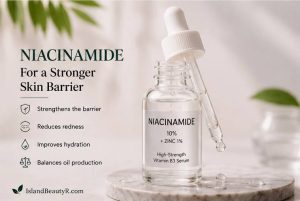
Niacinamide (Vitamin B3) is one of the most researched skincare ingredients for barrier support.
Clinical studies have shown that niacinamide can:
- Increase ceramide production
- Improve hydration
- Reduce redness
- Strengthen barrier function
- Decrease inflammation
- Support healthy skin renewal
For most people, concentrations between 2% and 5% provide excellent results with minimal irritation.
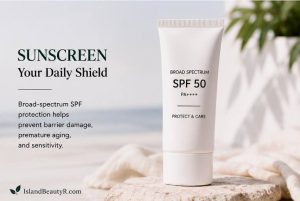
7. Don’t Skip Sunscreen
Ultraviolet radiation weakens the skin barrier by damaging lipids and triggering inflammation.
Daily sunscreen is essential—even on cloudy days.
Choose a broad-spectrum sunscreen with SPF 30 or higher and reapply as needed if you’re spending time outdoors.
Without UV protection, skin barrier recovery may take longer.
8. Add Panthenol (Provitamin B5)
Panthenol is known for its soothing and hydrating properties.
It helps:
- Calm irritated skin
- Reduce redness
- Improve moisture retention
- Support barrier regeneration
It is especially useful after over-exfoliation, retinoid irritation, or environmental stress.
9. Hydrate With Glycerin and Hyaluronic Acid
Hydration plays a critical role in skin barrier recovery.
Humectants such as:
- Glycerin
- Hyaluronic Acid
- Sodium PCA
draw water into the outer layers of the skin, helping improve flexibility and comfort.
For best results, pair humectants with a moisturizer that also contains emollients and occlusives to prevent moisture from evaporating.
10. Avoid Fragrance During Recovery
Fragrance is one of the most common causes of cosmetic irritation.
Even products labeled as “natural” may contain essential oils that irritate damaged skin.
During skin barrier repair, choose products that are:
- Fragrance-free
- Essential oil-free
- Dye-free whenever possible
11. Reduce Retinoid Frequency
Retinoids are highly effective for acne and anti-aging, but they can temporarily impair the skin barrier if used too aggressively.
If your skin becomes excessively dry, flaky, or sensitive:
- Reduce application frequency
- Use a moisturizer before or after retinoids if tolerated
- Gradually increase use as your skin adapts
Patience is more effective than pushing through irritation.
12. Sleep Well
Your skin performs much of its repair work while you sleep.
Poor sleep has been linked to slower barrier recovery, increased inflammation, and reduced skin hydration.
Aim for 7–9 hours of quality sleep each night to support optimal skin healing.
13. Eat a Nutrient-Rich Diet
Healthy skin starts from within.
A balanced diet rich in the following nutrients supports barrier function:
- Omega-3 fatty acids
- Vitamin C
- Vitamin E
- Zinc
- Protein
- Antioxidants
These nutrients contribute to collagen production, lipid synthesis, and overall skin health.
14. Manage Stress
Chronic stress increases cortisol levels, which can impair skin repair and worsen inflammation.
Helpful stress-management strategies include:
- Regular exercise
- Mindfulness or meditation
- Deep breathing
- Spending time outdoors
- Maintaining consistent sleep habits
Supporting your overall well-being also supports your skin.
15. Give Your Skin Time
One of the biggest mistakes people make is expecting overnight results.
Skin barrier repair is a biological process that takes time.
While mild damage may improve within a week, more significant barrier disruption often requires several weeks of consistent care.
Avoid switching products too frequently, and allow your routine enough time to work.
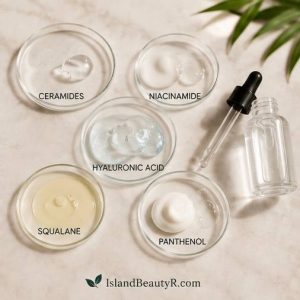
The Best Ingredients for Skin Barrier Repair
When choosing skincare products, prioritize ingredients with strong scientific evidence for barrier support.
| Ingredient | Primary Benefit |
|---|---|
| Ceramides | Replenish essential skin lipids |
| Niacinamide | Boost ceramide production and reduce inflammation |
| Panthenol | Soothe irritation and improve hydration |
| Glycerin | Attract moisture into the skin |
| Hyaluronic Acid | Increase skin hydration |
| Squalane | Restore softness and reduce moisture loss |
| Cholesterol | Support the skin’s natural lipid matrix |
| Colloidal Oatmeal | Calm itching and strengthen the barrier |
Pro Tip:
For the fastest recovery, look for moisturizers containing ceramides, cholesterol, and fatty acids together, as this combination most closely resembles the skin’s natural lipid structure.
Morning Skin Barrier Repair Routine
A simple morning routine is often more effective than a complicated 10-step skincare routine.
The goal is to protect your skin from environmental damage while supporting continuous skin barrier repair.
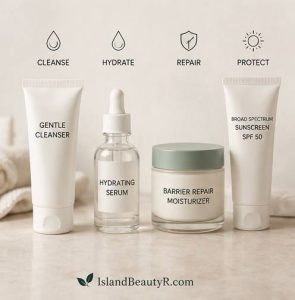
Step 1: Gentle Cleanser
If your skin isn’t oily in the morning, simply rinsing with lukewarm water may be enough.
Otherwise, choose a mild cleanser that removes overnight oil without stripping essential lipids.
Avoid cleansers that leave your skin feeling tight.
Step 2: Hydrating Serum
Apply a lightweight hydrating serum containing ingredients such as:
- Hyaluronic Acid
- Glycerin
- Panthenol
These humectants help attract water into the outer layer of the skin.
Step 3: Barrier Repair Moisturizer
A moisturizer designed for skin barrier repair should ideally contain:
- Ceramides
- Cholesterol
- Fatty Acids
- Squalane
These ingredients work together to restore the skin’s natural protective structure.
Step 4: Broad-Spectrum Sunscreen
Finish every morning with SPF 30 or higher.
Sun exposure is one of the biggest reasons damaged skin takes longer to recover.
Even short periods of daily UV exposure can slow barrier repair and increase inflammation.
Night Skin Barrier Repair Routine
Nighttime is when the skin naturally enters repair mode.
Your evening routine should focus on replenishing moisture and minimizing irritation.
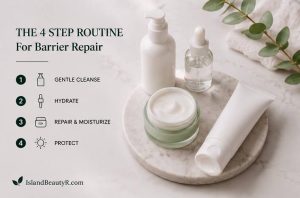
Step 1
Cleanse gently.
Step 2
Apply a hydrating serum if needed.
Step 3
Use a ceramide-rich moisturizer.
Step 4
Seal everything with a nourishing cream if your skin feels extremely dry.
During recovery, avoid experimenting with new active ingredients.
Skin Barrier Recovery Timeline
One of the most common questions people ask is:
“How long does skin barrier repair take?”
The answer depends on the severity of the damage.
Mild Damage (3–7 Days)
Symptoms:
- Slight dryness
- Mild tightness
- Occasional sensitivity
Most people notice significant improvement within one week after simplifying their skincare routine.
Moderate Damage (2–6 Weeks)
Symptoms:
- Persistent redness
- Peeling
- Burning
- Increased sensitivity
Recovery requires consistent moisturizing and avoiding irritating ingredients.
Severe Barrier Damage (6–12 Weeks)
Symptoms:
- Chronic inflammation
- Frequent irritation
- Painful dryness
- Cracked skin
If symptoms persist or worsen despite gentle skincare, consult a dermatologist.
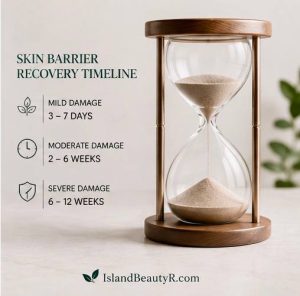
Recovery Expectations
| Severity | Recovery Time |
|---|---|
| Mild | 3–7 Days |
| Moderate | 2–6 Weeks |
| Severe | 6–12 Weeks |
Signs Your Skin Barrier Is Healing
One of the easiest ways to tell that your skin barrier repair routine is working is by observing gradual improvements rather than dramatic overnight changes.
Here are the most common signs.

Less Redness
Inflammation begins to decrease.
Your skin tone becomes more even.
Reduced Tightness
Healthy skin feels comfortable after cleansing.
If your face no longer feels stretched or tight, your barrier is improving.
Products No Longer Sting
A damaged barrier often causes even gentle moisturizers to burn.
As the barrier heals, this stinging sensation gradually disappears.
Better Hydration
Your skin starts holding onto moisture for longer periods.
You may notice:
- Softer texture
- Less flaking
- Improved glow
Fewer Breakouts
An impaired barrier contributes to inflammation.
Once healing begins, many people experience fewer irritation-related breakouts.
Smoother Texture
Dry patches slowly disappear.
Skin feels softer and healthier.
Healthy Barrier vs Damaged Barrier
| Healthy Barrier | Damaged Barrier |
|---|---|
| Comfortable skin | Tight skin |
| Even tone | Redness |
| Smooth texture | Rough patches |
| Holds moisture | Dehydrates quickly |
| No stinging | Burning sensation |
Skin Barrier vs Moisture Barrier
Many people use these terms interchangeably.
Technically, the skin barrier refers to the entire protective outer layer of the skin.
The moisture barrier specifically describes the components responsible for preventing water loss.
Although the two concepts overlap significantly, “skin barrier” is the broader and more accurate scientific term.
Myth vs Fact
| Myth | Fact |
|---|---|
| Oily skin doesn’t need barrier repair. | Any skin type can develop barrier damage. |
| Drinking more water repairs the barrier. | Water alone cannot replace lost skin lipids. |
| More skincare means faster healing. | Simplicity is often better during recovery. |
Common Mistakes That Slow Skin Barrier Repair
Even with good products, certain habits can delay healing.
Using Too Many Products
More products do not equal faster recovery.
A simple routine often works best.
Exfoliating Too Soon
Resuming acids before your skin has fully healed can restart the cycle of irritation.
Skipping Moisturizer
Hydration alone isn’t enough.
Your skin also needs lipids to rebuild the barrier.
Forgetting Sunscreen
UV damage constantly disrupts barrier repair.
Daily sunscreen is essential.
Switching Products Too Frequently
Consistency matters more than constantly trying new skincare products.
When Should You See a Dermatologist?
Seek professional care if:
- Symptoms last longer than 8 weeks.
- Cracks begin to bleed.
- Swelling develops.
- Pain increases.
- Signs of infection appear.
What Recent Research Says:
Recent dermatology research suggests that moisturizers containing ceramides, cholesterol, and free fatty acids in balanced ratios may improve skin barrier recovery more effectively than formulations containing ceramides alone. Studies also emphasize that maintaining a mildly acidic skin surface and avoiding excessive cleansing can significantly support natural barrier repair. For readers interested in exploring the scientific evidence in greater detail, several peer-reviewed studies on skin barrier function and repair are available through PubMed.
Frequently Asked Questions:
Can a damaged skin barrier heal completely?
Yes.
Most cases of barrier damage improve significantly with gentle skincare and consistent moisturizing.
Can I use retinol while repairing my skin barrier?
If your skin is actively irritated, it’s usually best to pause retinoids temporarily and restart them gradually after recovery.
Which ingredient is best for skin barrier repair?
Ceramides have the strongest evidence for restoring the skin’s lipid barrier.
However, niacinamide, panthenol, glycerin, and cholesterol also play important roles.
Is Vaseline good for skin barrier repair?
Petrolatum is an excellent occlusive ingredient that reduces water loss.
However, it works best when applied over hydrating and barrier-supporting products rather than on dry skin alone.
Can over-cleansing damage the skin barrier?
Yes.
Washing too frequently or using harsh cleansers removes protective lipids and increases transepidermal water loss.
Final Thoughts
A healthy skin barrier is the foundation of healthy skin.
Whether your skin has been damaged by over-exfoliation, retinoids, harsh weather, or an overly complicated skincare routine, recovery is possible with patience and the right approach.
Focus on gentle cleansing, barrier-supporting ingredients, daily sun protection, and consistency.
Remember that skin barrier repair is a gradual process—not an overnight transformation.
By protecting your skin today, you’ll help it stay stronger, healthier, and more resilient in the future.
Great post,Thanks for sharing
Thanks for reading! I appreciate your support.
Honestly, it’s really good
Thank you! I’m happy you found it helpful
Pingback: 9 Powerful Signs Your Skin Barrier Is Healing: Science-Backed Guide - IslandBeautyR
I like this
Thank you so much! I’m glad you liked it.💗
An Engaging Blog Post
Thanks for reading! I appreciate your support.
Pingback: Skin Barrier Recovery Timeline: 7 Powerful Science-Backed Stages to Repair Damaged Skin in 2026 - IslandBeautyR
WOW,Very wonderful
Thank you for your kind words!