Rasta Kafashan

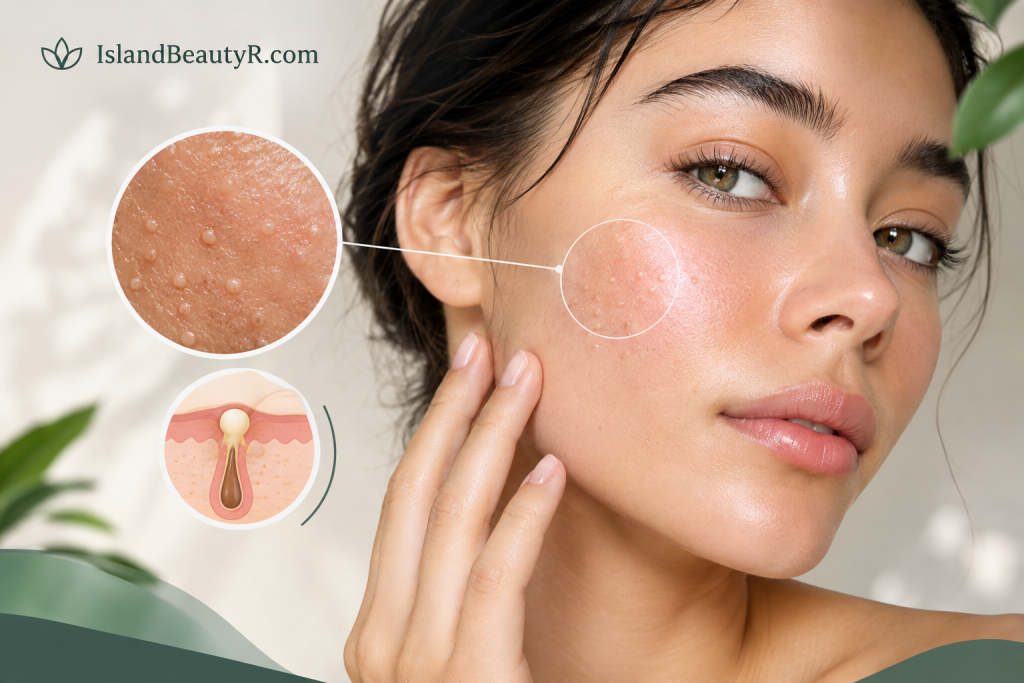
Woman with visible closed comedones and clogged pores on facial skin

9 Powerful Ways to Treat Closed Comedones + 9 Science-Backed Causes

Closed Comedones: 9 Causes and Science-Backed Ways to Treat Them Small, flesh-colored bumps that make your skin look uneven can be surprisingly difficult to treat. If they do not look like typical pimples and rarely come to a visible “head,” you may be dealing with closed comedones. Closed comedones are a type of non-inflammatory acne

9 Powerful Ways to Treat Closed Comedones + 9 Science-Backed Causes Read More »

Can you over-moisturize your skin? A woman with healthy-looking skin in a minimalist skincare setting

7 Powerful Signs You Can Over-Moisturize Your Skin — And How to Fix It

7 Powerful Signs You Can Over-Moisturize Your Skin — And How to Fix It Moisturizer is one of the simplest steps in a skincare routine—but more is not always better. If your skin feels tight, dry, or irritated, adding another layer of moisturizer may seem like the obvious solution. Yet if you constantly apply rich

7 Powerful Signs You Can Over-Moisturize Your Skin — And How to Fix It Read More »

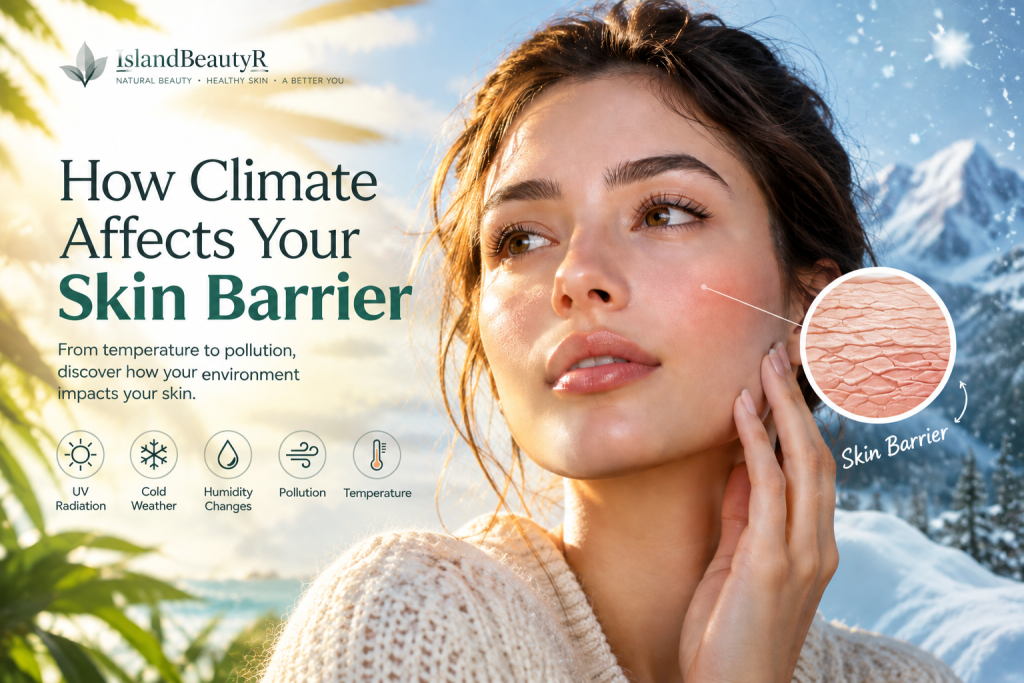
How climate affects your skin barrier with temperature, humidity, UV, cold weather, and pollution

7 Powerful Ways How Climate Affects Your Skin Barrier in 2026

7 Powerful Science-Backed Facts: How Climate Affects Your Skin Barrier Have you ever noticed that your skin looks and feels completely different when the weather changes? One week, your skin may feel soft and balanced. A few days later, it can suddenly become tight, flaky, oily, irritated, or unusually sensitive. This isn’t necessarily a coincidence.

7 Powerful Ways How Climate Affects Your Skin Barrier in 2026 Read More »

Skin barrier recovery timeline showing a woman with healthy skin and a simple skincare routine

Skin Barrier Recovery Timeline: 7 Powerful Science-Backed Stages to Repair Damaged Skin in 2026

Skin Barrier Recovery Timeline: 7 Science-Backed Stages to Repair Damaged Skin in 2026 If your skin suddenly feels tight, dry, irritated, unusually sensitive, or prone to burning, you may be dealing with a damaged skin barrier. But one of the biggest questions is: how long does it actually take for the skin barrier to recover?

Skin Barrier Recovery Timeline: 7 Powerful Science-Backed Stages to Repair Damaged Skin in 2026 Read More »

9 signs your skin barrier is healing with healthier, hydrated, and glowing skin

9 Powerful Signs Your Skin Barrier Is Healing: Science-Backed Guide

9 Powerful Signs Your Skin Barrier Is Healing: Science-Backed Guide If your skin has recently become dry, tight, flaky, red, or unusually sensitive, you may be wondering whether your skincare routine is actually helping. The good news is that your skin often gives you clues when things are moving in the right direction. Knowing the

9 Powerful Signs Your Skin Barrier Is Healing: Science-Backed Guide Read More »

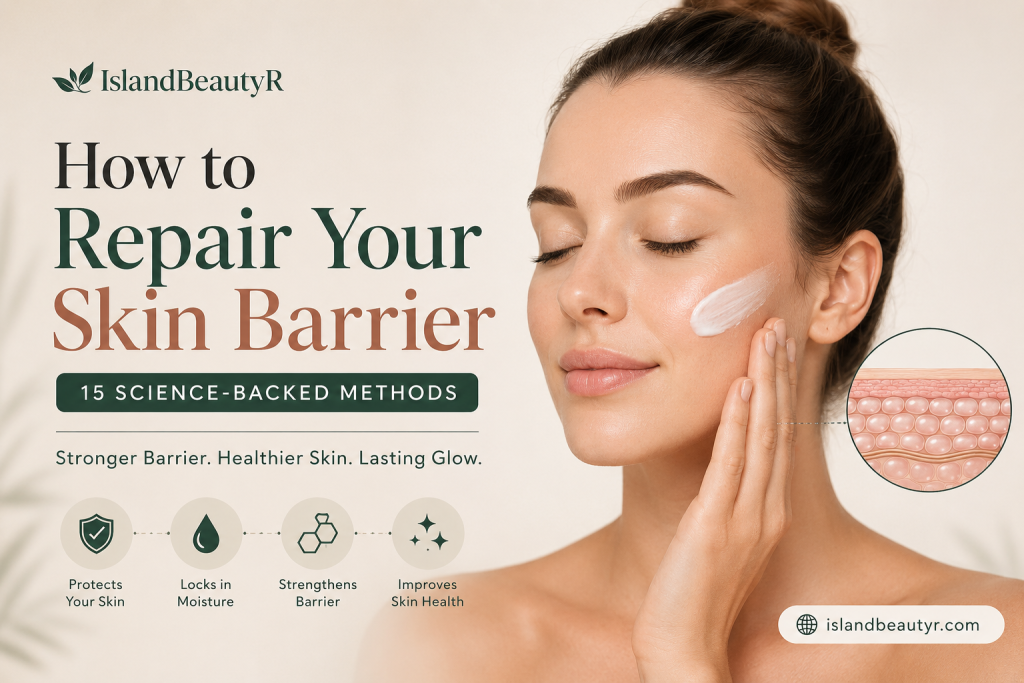
How to repair your skin barrier with science-backed skincare ingredients for healthy, glowing skin

The Ultimate Guide to Skin Barrier Repair: 15 Science-Backed Ways to Restore Healthy Skin Fast

The Ultimate Guide to Skin Barrier Repair: 15 Science-Backed Ways to Restore Healthy Skin Fast Quick Answer Skin barrier repair is the process of restoring your skin’s protective outer layer after it has been damaged by over-exfoliation, harsh skincare products, UV exposure, or environmental stress. Mild damage may heal within 1–2 weeks, while severe cases

The Ultimate Guide to Skin Barrier Repair: 15 Science-Backed Ways to Restore Healthy Skin Fast Read More »

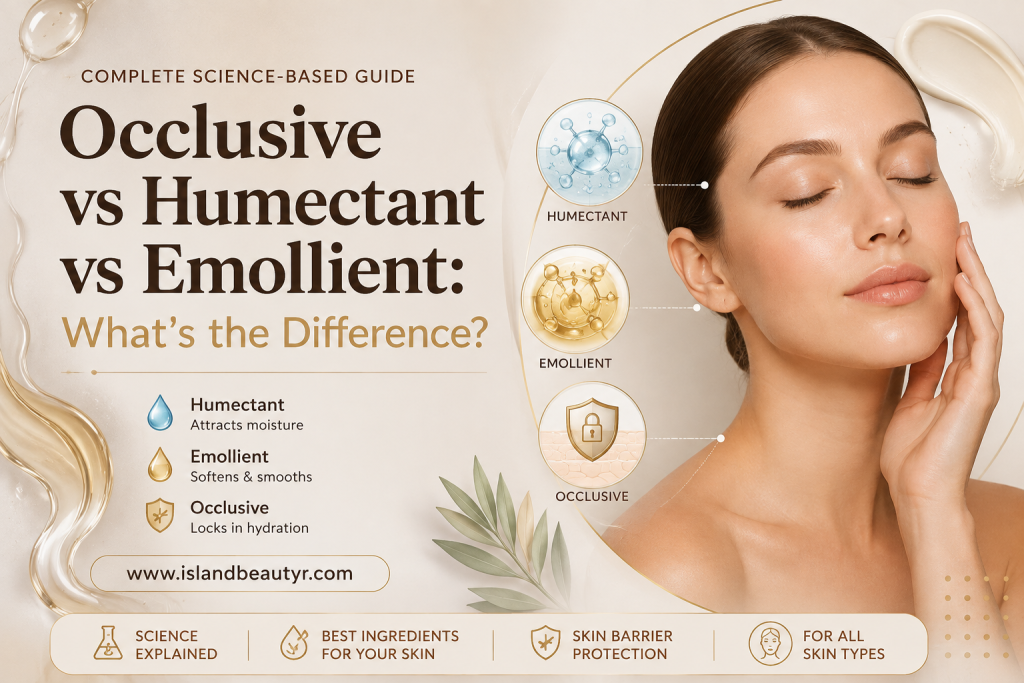
Occlusive vs Humectant vs Emollient comparison showing the key differences between moisturizing ingredients for skin hydration and skin barrier repair

Occlusive vs Humectant vs Emollient: 15 Powerful Science-Backed Differences for Healthier Skin (2026 Guide)

Occlusive vs Humectant vs Emollient: What’s the Difference? Have you ever looked at the ingredient list of a moisturizer and wondered why some products contain glycerin, others rely on petrolatum, while many feature shea butter, ceramides, or squalane? Although all these ingredients help keep your skin hydrated, they don’t work in the same way. Understanding

Occlusive vs Humectant vs Emollient: 15 Powerful Science-Backed Differences for Healthier Skin (2026 Guide) Read More »

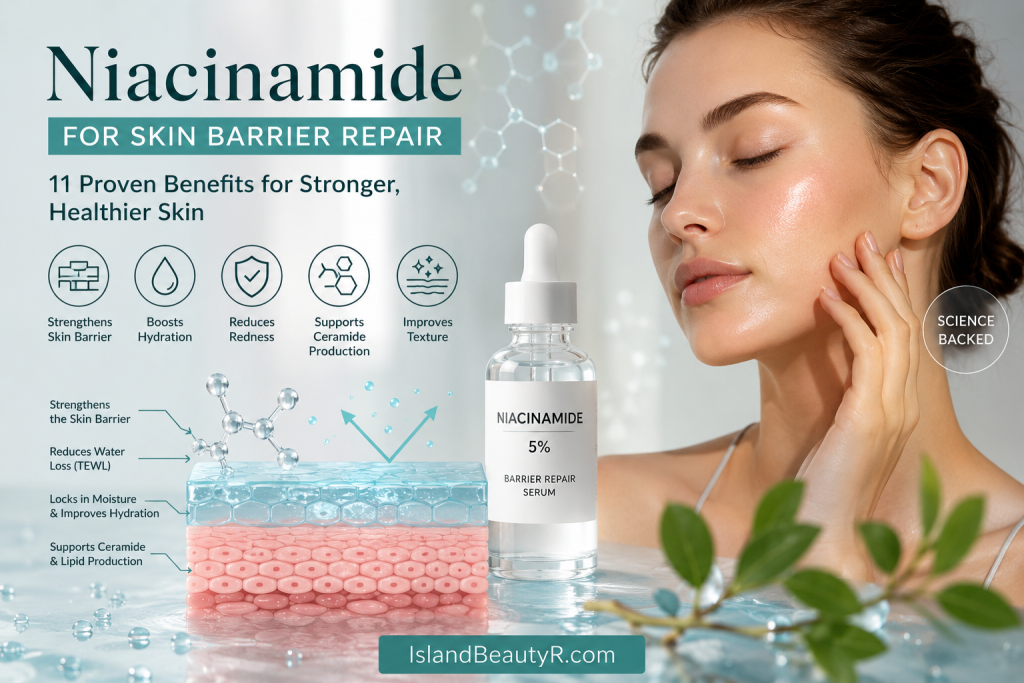
Niacinamide for Skin Barrier Repair serum helps strengthen the skin barrier, improve hydration, increase ceramide production, and reduce transepidermal water loss (TEWL)

The Ultimate Niacinamide for Skin Barrier Repair Guide: 11 Proven Benefits for Stronger, Healthier Skin (2026)

Niacinamide for Skin Barrier Repair: 11 Proven Benefits + Complete Guide (2026) What Is Niacinamide? Healthy skin depends on a strong protective barrier. When this barrier becomes damaged, the skin loses water more quickly, becomes irritated, and is more vulnerable to environmental stressors. Among the many skincare ingredients available today, niacinamide for skin barrier repair

The Ultimate Niacinamide for Skin Barrier Repair Guide: 11 Proven Benefits for Stronger, Healthier Skin (2026) Read More »

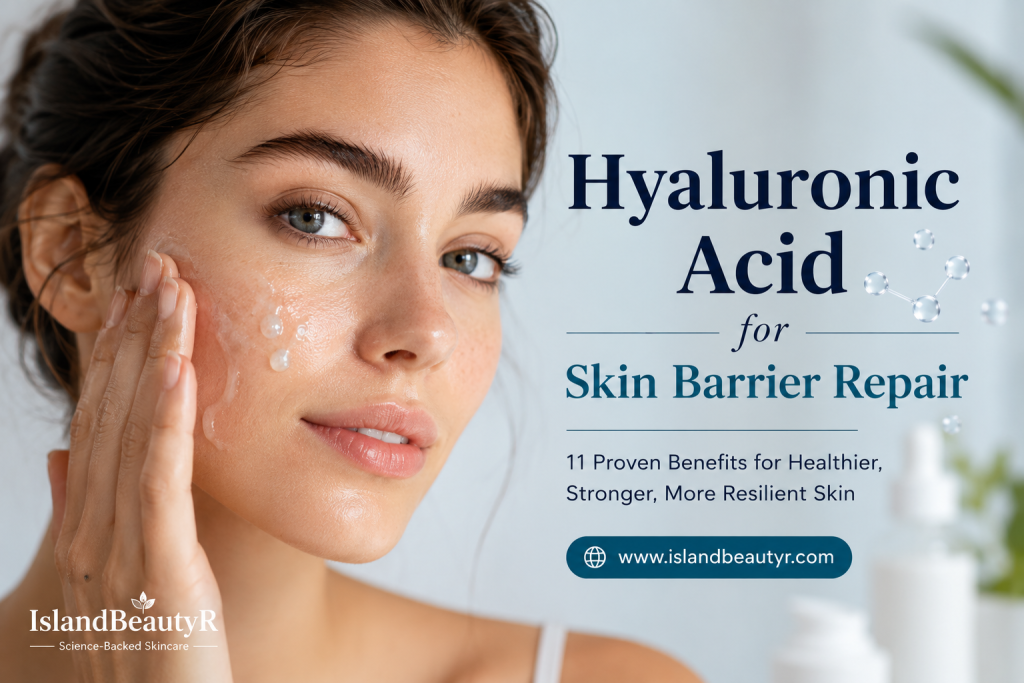
Hyaluronic Acid for Skin Barrier Repair – healthy, glowing skin and a strengthened skin barrier

Hyaluronic Acid for Skin Barrier Repair: 11 Science-Backed Secrets for Healthier Skin

 Hyaluronic Acid for Skin Barrier Repair: 11 Proven Benefits Every Skincare Lover Should Know Walk into any skincare store or browse your favorite beauty website, and you’ll quickly notice one ingredient appearing almost everywhere: hyaluronic acid. From lightweight serums to dermatologist-recommended moisturizers, it’s often promoted as the ultimate solution for dry, dehydrated, and sensitive skin.

Hyaluronic Acid for Skin Barrier Repair: 11 Science-Backed Secrets for Healthier Skin Read More »

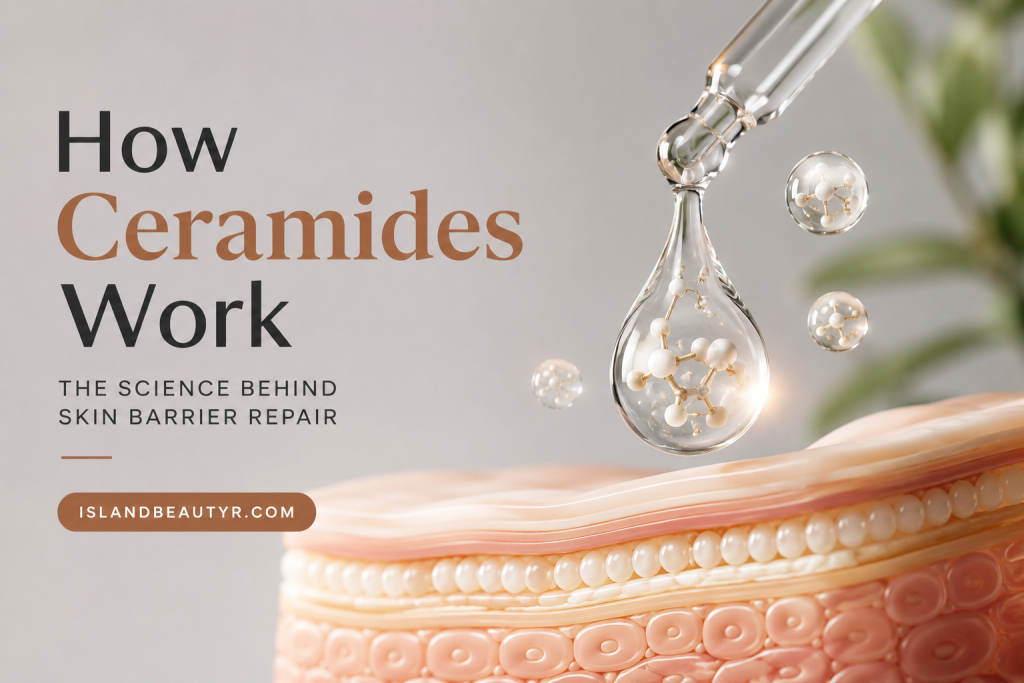
How Ceramides Work: scientific illustration of ceramides repairing the skin barrier to improve hydration and reduce transepidermal water loss

The Ultimate Guide to How Ceramides Work: 9 Proven Ways to Repair Your Skin Barrier

How Ceramides Work: The Science Behind Skin Barrier Repair Healthy skin is not only about having enough moisture; it depends on having a strong and functional skin barrier. The outermost layer of the skin works as a protective shield that prevents excessive water loss while protecting the body from environmental stressors, pollutants, irritants, and microorganisms.

The Ultimate Guide to How Ceramides Work: 9 Proven Ways to Repair Your Skin Barrier Read More »

Shopping Cart
  • Your cart is empty.