
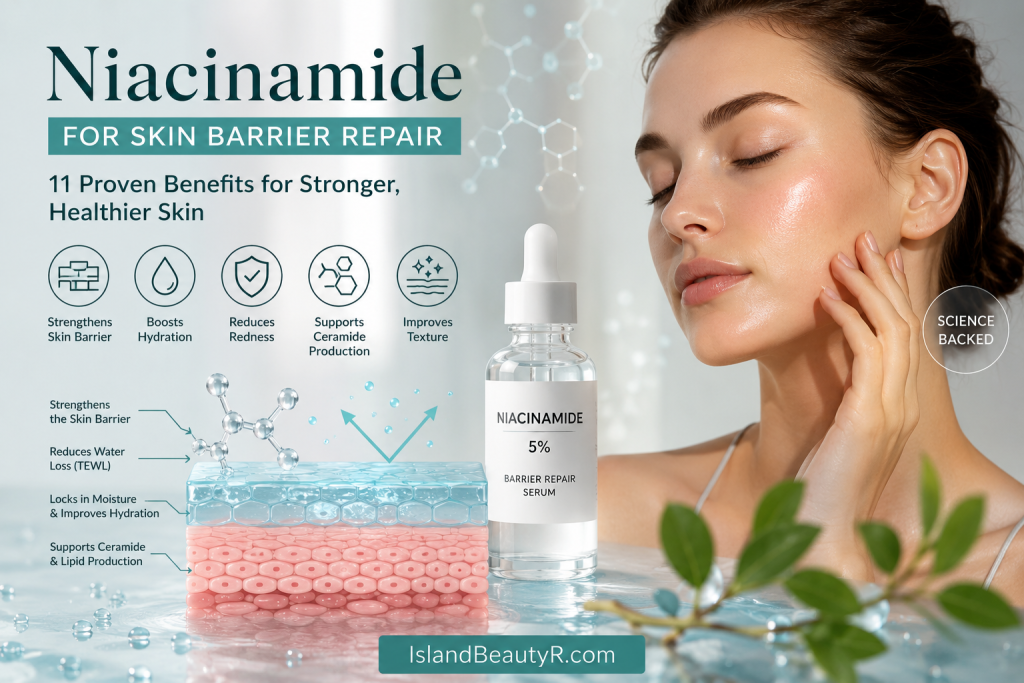
Niacinamide for Skin Barrier Repair: 11 Proven Benefits + Complete Guide (2026)
What Is Niacinamide?
Healthy skin depends on a strong protective barrier. When this barrier becomes damaged, the skin loses water more quickly, becomes irritated, and is more vulnerable to environmental stressors. Among the many skincare ingredients available today, niacinamide for skin barrier repair has become one of the most researched and dermatologist-recommended options.
Niacinamide, also known as nicotinamide, is a water-soluble form of Vitamin B3. Unlike exfoliating acids or retinoids, niacinamide works by supporting the skin’s natural biological processes instead of forcing rapid cell turnover. Because of this, it is suitable for nearly every skin type, including sensitive, acne-prone, oily, combination, and dry skin.
Scientific research over the last two decades has shown that niacinamide for skin barrier repair helps strengthen the epidermis, reduce inflammation, stimulate ceramide production, improve hydration, regulate oil production, and even reduce visible signs of aging.
Unlike many trending skincare ingredients, niacinamide has extensive clinical evidence supporting its effectiveness.
This is islandbeautyr.com, and I am Rasta Kafashan, the author of this website. I can help you better understand and become more aware of your skin, based on the most up-to-date scientific research. So, stay with us and follow islandbeautyr.com.
What Is the Skin Barrier?
Before understanding why niacinamide for skin barrier repair works so well, it’s important to understand the skin barrier itself.
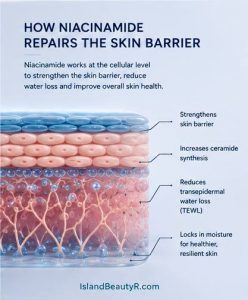
The skin barrier is the outermost layer of the epidermis, scientifically called the stratum corneum. It functions like a brick wall.
- Skin cells are the bricks.
- Lipids (ceramides, cholesterol, fatty acids) are the mortar.
When these lipids become depleted, tiny gaps appear between skin cells. These gaps allow moisture to escape while making it easier for irritants, allergens, pollution, and bacteria to penetrate the skin.
Common signs of a damaged skin barrier include:
- Dryness
- Tightness
- Burning sensation
- Increased sensitivity
- Flaking
- Redness
- Acne flare-ups
- Rough texture
- Increased Transepidermal Water Loss (TEWL)
Repairing these lipid structures is where niacinamide for skin barrier repair becomes especially valuable.
.
How Does Niacinamide Repair the Skin Barrier?
Niacinamide works differently from moisturizers that simply sit on the skin’s surface.
Instead, it improves skin from within by enhancing multiple biological pathways that support barrier integrity.
Research shows niacinamide can:
- Increase ceramide synthesis
- Stimulate free fatty acid production
- Increase cholesterol production
- Reduce transepidermal water loss (TEWL)
- Improve epidermal differentiation
- Support keratinocyte maturation
- Reduce inflammatory cytokines
- Improve microcirculation
Together, these mechanisms rebuild a healthier barrier rather than providing only temporary hydration.
One of the biggest reasons dermatologists recommend niacinamide for skin barrier repair is that it addresses the underlying causes of barrier dysfunction instead of masking symptoms.
11 Science-Backed Benefits of Niacinamide for Skin Barrier Repair
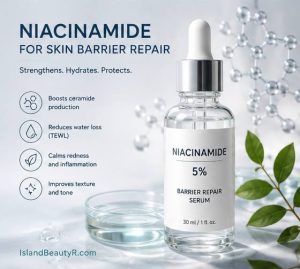
1. Boosts Ceramide Production
Ceramides make up nearly half of the skin’s protective lipids.
Studies show niacinamide stimulates natural ceramide synthesis, helping restore the skin’s protective shield.
Higher ceramide levels mean:
- stronger barrier
- smoother skin
- reduced irritation
- healthier moisture balance
2. Reduces Water Loss
One hallmark of barrier damage is excessive Transepidermal Water Loss (TEWL).
Clinical studies consistently demonstrate that niacinamide for skin barrier repair lowers TEWL, allowing the skin to retain moisture more effectively.
As hydration improves, skin becomes softer, less tight, and more resilient.
3. Calms Inflammation
Inflammation contributes to redness, irritation, rosacea symptoms, eczema flare-ups, and acne.
Niacinamide helps regulate inflammatory mediators, reducing visible redness without compromising the barrier.
This makes it ideal after:
- over-exfoliation
- retinoid irritation
- chemical peels
- laser treatments
- sun exposure
4. Improves Skin Hydration
Rather than acting like a temporary moisturizer, niacinamide improves the skin’s ability to hold water naturally.
After several weeks of consistent use, many people notice:
- plumper skin
- improved elasticity
- smoother texture
- healthier appearance
5. Supports Acne-Prone Skin
Many acne treatments weaken the barrier.
Niacinamide offers a unique advantage because it helps reduce inflammation while strengthening the skin simultaneously.
This dual action makes it particularly useful alongside benzoyl peroxide, adapalene, or retinoids.
6. Reduces Excess Oil Production
Research suggests 2–5% niacinamide may help regulate sebum production.
Less excess oil often means:
- fewer clogged pores
- reduced shine
- healthier skin balance
This is especially beneficial for combination and oily skin.
7. Minimizes Redness
Persistent redness often results from chronic inflammation and barrier dysfunction.
Niacinamide helps improve barrier integrity, reducing redness over time without harsh active ingredients.
8. Improves Skin Texture
A compromised barrier frequently causes rough, uneven skin.
As barrier function improves, skin naturally becomes:
- smoother
- softer
- more refined
This gradual improvement occurs without aggressive exfoliation.
9. Strengthens Skin Against Environmental Stress
Daily exposure to UV radiation, pollution, and harsh weather weakens the skin barrier.
Niacinamide enhances the skin’s natural defense systems, helping it better resist environmental damage.
10. Helps Reduce Hyperpigmentation
Although primarily known for barrier repair, niacinamide also reduces melanosome transfer between cells.
This can gradually fade:
- post-inflammatory hyperpigmentation
- acne marks
- uneven skin tone
making it a multifunctional ingredient for overall skin health.
11. Supports Healthy Skin Aging
A healthy barrier is essential for youthful-looking skin.
By maintaining hydration, reducing inflammation, and improving lipid production, niacinamide for skin barrier repair also helps soften the appearance of fine lines and supports firmer, healthier skin.

Best Niacinamide Concentration for Skin Barrier Repair
One of the most common questions people ask is: What percentage of niacinamide is best for skin barrier repair?
The answer depends on your skin type, sensitivity, and skincare goals. While higher percentages are heavily marketed, research suggests that more isn’t always better.
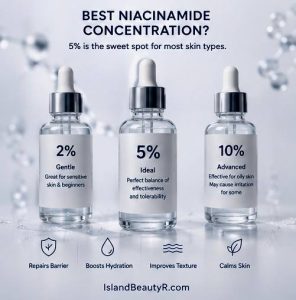
2% Niacinamide
A 2% concentration is an excellent starting point for people with:
- Sensitive skin
- Mild barrier damage
- Rosacea-prone skin
- First-time users
Although gentle, it can still improve hydration and support the skin barrier with consistent use.
5% Niacinamide (The Sweet Spot)
Most dermatologists consider 5% niacinamide the ideal concentration for niacinamide for skin barrier repair.
Clinical studies have shown that 5% formulations can:
- Increase ceramide synthesis
- Reduce transepidermal water loss (TEWL)
- Improve skin elasticity
- Minimize redness
- Strengthen the skin barrier without causing significant irritation
For most people, this concentration offers the best balance between effectiveness and tolerability.
10% Niacinamide
Higher concentrations, such as 10%, have become increasingly popular. However, scientific evidence does not consistently show that they are significantly more effective than 5% for repairing the skin barrier.
Instead, some individuals may experience:
- Temporary redness
- Mild stinging
- Irritation
- Dryness
If your skin barrier is already compromised, starting with a lower concentration is generally the safer approach.
Which Concentration Should You Choose?
| Skin Type | Recommended Strength |
|---|---|
| Sensitive skin | 2–5% |
| Dry skin | 5% |
| Oily skin | 5–10% |
| Acne-prone skin | 5% |
| Damaged skin barrier | 5% |
For long-term skin health, consistency is far more important than using the highest concentration available.
How to Use Niacinamide for Skin Barrier Repair
Using niacinamide for skin barrier repair correctly can make the difference between noticeable improvement and disappointing results.
Fortunately, niacinamide is one of the easiest active ingredients to incorporate into a skincare routine.
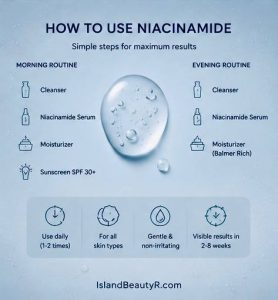
Morning Routine
- Gentle cleanser
- Hydrating serum (optional)
- Niacinamide serum
- Moisturizer containing ceramides
- Broad-spectrum SPF 30 or higher
Morning application helps reinforce the skin’s defenses against UV radiation, pollution, and environmental stressors throughout the day.
Evening Routine
- Gentle cleanser
- Niacinamide serum
- Barrier-repair moisturizer
At night, the skin naturally enters its repair phase. Applying niacinamide before a moisturizer helps support overnight barrier recovery.
How Often Should You Use It?
If your skin tolerates niacinamide well, it can be used:
- Once daily for beginners
- Twice daily for most people
Unlike stronger active ingredients, niacinamide rarely requires cycling or scheduled breaks.
How Long Does It Take to Repair the Skin Barrier with Niacinamide?
Barrier repair is a gradual biological process, and patience is essential.
While everyone’s skin responds differently, most people notice improvements within a few weeks.
Week 1–2
- Less tightness
- Reduced dryness
- Improved comfort
- Skin feels calmer
Week 3–4
- Better hydration
- Smoother texture
- Reduced redness
- Healthier-looking skin
Week 6–8
- Stronger skin barrier
- Reduced sensitivity
- Better moisture retention
- More resilient skin
If the barrier has been severely damaged by excessive exfoliation, harsh acne treatments, or environmental stress, full recovery may take several months.
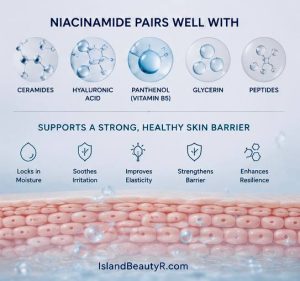
Ingredients That Work Well with Niacinamide
One reason niacinamide for skin barrier repair is so popular is its compatibility with many other skincare ingredients.
Ceramides
This is one of the best combinations for repairing a compromised barrier.
While niacinamide stimulates the skin to produce more ceramides naturally, ceramide-containing moisturizers replenish those lipids from the outside.
Together, they help restore the skin’s protective structure more effectively than either ingredient alone.
Hyaluronic Acid
Hyaluronic acid attracts water into the skin, while niacinamide helps prevent that moisture from escaping.
This pairing improves hydration without making the skin feel heavy or greasy.
Panthenol (Vitamin B5)
Panthenol is known for its soothing and moisturizing properties.
When combined with niacinamide, it can help calm irritation and support the skin’s natural healing process, making this duo especially beneficial for sensitive or recently irritated skin.
Glycerin
Glycerin is a classic humectant that draws moisture into the outer layers of the skin.
Using glycerin alongside niacinamide enhances hydration and supports a healthier skin barrier.
Peptides
Peptides help support collagen production and improve skin resilience.
Combined with niacinamide, they create a routine focused on both barrier repair and healthy skin aging.
Can You Use Niacinamide with Retinol?
Yes. In fact, this is one of the most effective combinations in skincare.
Retinol can sometimes cause dryness, peeling, or irritation, particularly during the first few weeks of use.
Niacinamide helps counter these effects by:
- Strengthening the skin barrier
- Reducing inflammation
- Improving hydration
- Minimizing irritation associated with retinoids
For many people, using niacinamide before or after retinol makes retinoid therapy more comfortable without reducing its effectiveness.
Can You Use Niacinamide with Vitamin C?
Yes.
Older skincare advice suggested avoiding the combination of niacinamide and vitamin C, but this belief was based on outdated laboratory conditions that do not reflect real-world skincare use.
Modern formulations are stable, and current evidence indicates that these ingredients can be used together safely.
In fact, combining them may provide complementary benefits:
- Brighter skin tone
- Improved antioxidant protection
- Better hydration
- Enhanced barrier support
Using both in the same routine is generally well tolerated by most skin types.
Who Should Use Niacinamide for Skin Barrier Repair?
Almost anyone can benefit from Niacinamide for Skin Barrier Repair, but some skin types see even greater improvements. Because Niacinamide for Skin Barrier Repair helps strengthen the skin’s natural defense system instead of aggressively exfoliating or drying the skin, it is suitable for both beginners and experienced skincare users.
You should consider Niacinamide for Skin Barrier Repair if you have:
- A damaged skin barrier from over-exfoliation
- Dry or dehydrated skin
- Sensitive skin
- Rosacea-prone skin
- Acne-prone skin using retinoids or benzoyl peroxide
- Oily or combination skin
- Redness and irritation
- Post-inflammatory hyperpigmentation
- Early signs of skin aging
Dermatologists often recommend Niacinamide for Skin Barrier Repair because it supports healthier skin while remaining gentle enough for long-term daily use.
Who Should Avoid Niacinamide for Skin Barrier Repair?
Although Niacinamide for Skin Barrier Repair is considered one of the safest skincare ingredients, it is not completely free from side effects.
Some individuals may experience mild irritation when:
- Using very high concentrations (10–20%)
- Applying multiple active ingredients in the same routine
- Applying niacinamide to severely compromised skin without moisturizer
- Using products containing irritating fragrances or alcohol
If irritation occurs, reduce the frequency of Niacinamide for Skin Barrier Repair to every other day and use a ceramide-rich moisturizer until your skin becomes more comfortable.
Common Mistakes When Using Niacinamide for Skin Barrier Repair
Many people believe Niacinamide for Skin Barrier Repair doesn’t work, when in reality the problem is how they use it.
1. Choosing the Highest Percentage
A higher concentration doesn’t necessarily produce better results. For most people, 5% Niacinamide for Skin Barrier Repair provides excellent barrier support with a lower risk of irritation.
2. Expecting Overnight Results
Niacinamide for Skin Barrier Repair works by improving the skin’s biological processes, not by creating an instant cosmetic effect. Visible improvements usually require several weeks of consistent use.
3. Skipping Moisturizer
Even though Niacinamide for Skin Barrier Repair improves ceramide production, it should still be paired with a high-quality moisturizer to lock in hydration and reinforce the barrier.
4. Using Harsh Cleansers
A harsh cleanser can undo many of the benefits of Niacinamide for Skin Barrier Repair by stripping away protective lipids every time you wash your face.
5. Ignoring Sunscreen
Repairing the skin barrier without protecting it from UV damage limits your progress. Daily sunscreen remains an essential part of any Niacinamide for Skin Barrier Repair routine.
Frequently Asked Questions (FAQ)
Does Niacinamide Repair the Skin Barrier?
Yes. Niacinamide for Skin Barrier Repair is supported by multiple clinical studies showing that it increases ceramide production, reduces transepidermal water loss (TEWL), improves hydration, and strengthens the skin’s natural protective barrier.
How Long Does Niacinamide Take to Repair the Skin Barrier?
Most people notice initial improvements within two to four weeks, while more significant benefits from Niacinamide for Skin Barrier Repair usually become visible after six to eight weeks of consistent daily use.
Is 10% Niacinamide Better Than 5%?
Not necessarily. Research suggests that 5% Niacinamide for Skin Barrier Repair is sufficient for most individuals. Higher concentrations may increase the likelihood of irritation without providing substantially greater barrier-repair benefits.
Can I Use Niacinamide Every Day?
Yes. Niacinamide for Skin Barrier Repair is gentle enough for daily use and can usually be applied once or twice a day, depending on your skin’s tolerance.
Can Niacinamide Be Used with Retinol?
Absolutely. Combining retinol with Niacinamide for Skin Barrier Repair is one of the best ways to reduce irritation while maintaining the anti-aging benefits of retinoids.
Can Niacinamide Be Used with Vitamin C?
Yes. Modern research shows that Niacinamide for Skin Barrier Repair can safely be combined with vitamin C in the same skincare routine, providing complementary antioxidant and barrier-supporting benefits.
Final Thoughts
If you are looking for one ingredient that is backed by decades of scientific research, suitable for nearly every skin type, and effective enough to become a permanent part of your routine, Niacinamide for Skin Barrier Repair is one of the strongest candidates.
Unlike ingredients that deliver only temporary hydration, Niacinamide for Skin Barrier Repair works at a deeper biological level by increasing ceramide synthesis, improving lipid production, reducing inflammation, and decreasing transepidermal water loss. These combined actions help create a stronger, healthier, and more resilient skin barrier over time.
Whether your skin has been damaged by over-exfoliation, retinoids, environmental stress, or chronic dryness, incorporating Niacinamide for Skin Barrier Repair into a consistent skincare routine can significantly improve hydration, reduce sensitivity, and support long-term skin health.
For the best results, choose a well-formulated 5% niacinamide product, pair it with a ceramide-rich moisturizer and a broad-spectrum sunscreen, and use it consistently. Remember that Niacinamide for Skin Barrier Repair is most effective when combined with a gentle, barrier-focused skincare routine rather than aggressive treatments.