
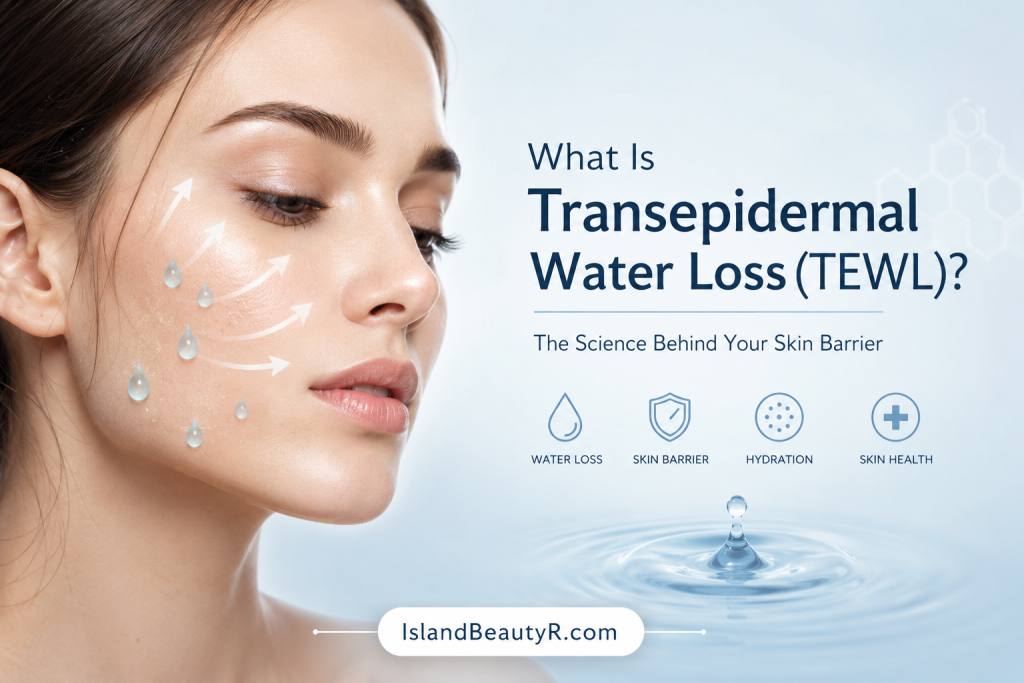
What Is Transepidermal Water Loss (TEWL)?
If your skin feels tight, flaky, irritated, or dehydrated despite using moisturizer, Transepidermal Water Loss (TEWL) may be the hidden reason.
Transepidermal Water Loss (TEWL) refers to the natural process where water passively evaporates from the deeper layers of the skin through the epidermis and into the surrounding air. This process happens continuously in every person and is a normal part of skin physiology.
However, when Transepidermal Water Loss (TEWL) becomes excessive, your skin barrier struggles to retain moisture. The result is dryness, sensitivity, redness, irritation, and faster skin aging.
Understanding Transepidermal Water Loss (TEWL) is one of the most important steps toward improving skin hydration and maintaining a healthy skin barrier.
This is islandbeautyr.com, and I am Rasta Kafashan, the author of this website. I can help you better understand and become more aware of your skin, based on the most up-to-date scientific research. So, stay with us and follow islandbeautyr.com.
What Does TEWL Actually Mean?
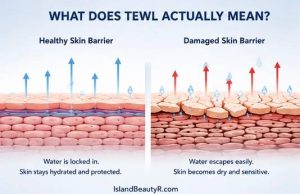
The outermost layer of your skin—the stratum corneum—acts like a protective wall.
Imagine this barrier as a brick wall:
- Skin cells are the bricks.
- Lipids such as ceramides, cholesterol, and fatty acids are the mortar.
When this structure is healthy, water remains inside the skin.
When damaged, water escapes much faster.
This increase in Transepidermal Water Loss (TEWL) weakens the skin barrier even further, creating a cycle of dehydration and irritation.
Why Is Transepidermal Water Loss Important?
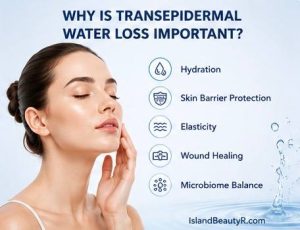
Water is essential for nearly every skin function.
Healthy hydration supports:
- Enzyme activity
- Skin elasticity
- Wound healing
- Barrier repair
- Healthy microbiome balance
Excessive Transepidermal Water Loss (TEWL) interferes with all of these processes.
Research shows elevated TEWL is commonly found in people with:
- Eczema
- Atopic dermatitis
- Rosacea
- Psoriasis
- Sensitive skin
- Aging skin
Higher TEWL is often considered one of the earliest measurable signs of a damaged skin barrier.
What Causes High Transepidermal Water Loss?
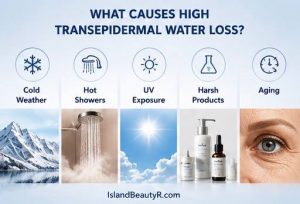
Several internal and external factors can increase Transepidermal Water Loss (TEWL).
1. Damaged Skin Barrier
Over-exfoliation, harsh cleansers, or excessive retinol use remove protective lipids.
Without enough ceramides, moisture escapes more easily.
2. Cold Weather
Low humidity significantly increases water evaporation from the skin.
This explains why skin often becomes dry during winter.
3. Hot Showers
Long, hot showers strip away natural oils.
As lipid levels decrease, Transepidermal Water Loss (TEWL) rises.
4. UV Exposure
Ultraviolet radiation damages structural proteins and barrier lipids, increasing water evaporation.
5. Aging
Natural ceramide production decreases with age.
Older skin typically experiences higher Transepidermal Water Loss (TEWL) than younger skin.
6. Harsh Skincare Products
Products containing high concentrations of alcohol, sulfates, or strong acids may weaken the barrier.
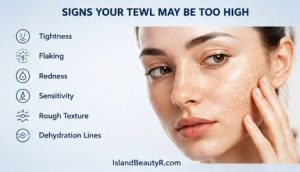
Signs Your TEWL May Be Too High
Common symptoms include:
- Tight skin after cleansing
- Persistent dryness
- Flaking
- Redness
- Increased sensitivity
- Burning after skincare products
- Rough texture
- Fine dehydration lines
Although these signs don’t confirm elevated Transepidermal Water Loss (TEWL) on their own, they often indicate that the skin barrier needs support.
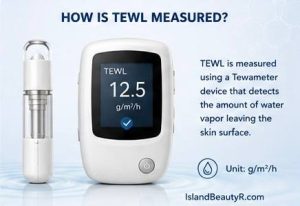
How Is TEWL Measured?
In research and dermatology clinics, Transepidermal Water Loss (TEWL) is measured using specialized instruments called Tewameters.
These devices detect the amount of water vapor leaving the skin surface.
Results are usually reported in:
g/m²/h (grams per square meter per hour)
Higher values generally indicate a weaker skin barrier.
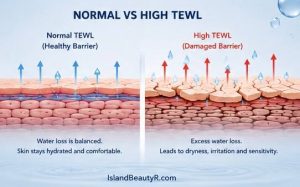
Normal vs High TEWL
Although values vary depending on body site and environmental conditions:
| TEWL Level | Interpretation |
|---|---|
| Low | Strong skin barrier |
| Moderate | Normal barrier function |
| High | Compromised skin barrier |
| Very High | Significant barrier damage |
Dermatologists often use TEWL measurements in clinical research to evaluate skincare products and monitor skin barrier recovery.
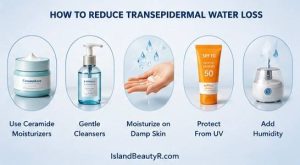
How to Reduce Transepidermal Water Loss
Reducing Transepidermal Water Loss (TEWL) requires restoring the skin’s protective barrier rather than simply adding moisture.
Use Ceramide-Based Moisturizers
Ceramides replace lost barrier lipids and help seal moisture inside the skin.
Avoid Over-Exfoliation
Limit chemical exfoliants to prevent unnecessary barrier damage.
Choose Gentle Cleansers
Use sulfate-free cleansers with a skin-friendly pH.
Apply Moisturizer on Damp Skin
Moisturizing immediately after cleansing helps trap water before it evaporates.
Protect Against UV Damage
Daily sunscreen prevents UV-induced barrier disruption.
Add Humidity
Using a humidifier during dry seasons can reduce environmental water loss.
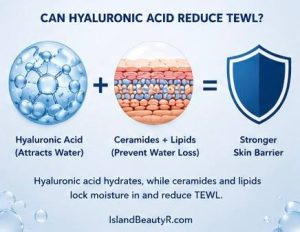
Can Hyaluronic Acid Reduce TEWL?
Not by itself.
Hyaluronic acid attracts water into the skin but does not create a strong barrier to prevent evaporation.
For best results, combine hyaluronic acid with:
- Ceramides
- Cholesterol
- Fatty acids
- Occlusive ingredients like petrolatum or squalane
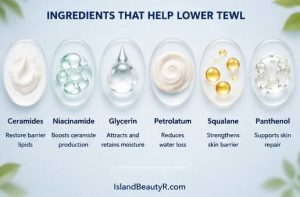
Ingredients That Help Lower TEWL
Scientific evidence supports several ingredients for reducing Transepidermal Water Loss (TEWL)
| Ingredient | Benefit |
|---|---|
| Ceramides | Restore barrier lipids |
| Niacinamide | Stimulates ceramide production |
| Petrolatum | Reduces water loss dramatically |
| Glycerin | Improves hydration |
| Squalane | Strengthens barrier |
| Panthenol | Supports skin repair |
| Colloidal Oatmeal | Calms inflammation |
Common Myths About TEWL:
Myth: Only dry skin has high TEWL.
False.
Oily skin can also exhibit elevated Transepidermal Water Loss (TEWL) when the skin barrier is damaged.
Myth: Drinking more water fixes TEWL.
Hydration is important for overall health, but excessive Transepidermal Water Loss (TEWL) is primarily a barrier issue rather than a water intake problem.
Myth: More moisturizer always lowers TEWL.
Only moisturizers containing barrier-repair ingredients effectively reduce water loss.
Frequently Asked Questions:
Is Transepidermal Water Loss bad?
No. Normal TEWL is a natural physiological process. Problems occur only when water loss becomes excessive.
Can TEWL be reversed?
Yes. In many cases, repairing the skin barrier with appropriate skincare and avoiding irritants can significantly reduce Transepidermal Water Loss (TEWL).
Does retinol increase TEWL?
During the adjustment period, retinoids may temporarily increase Transepidermal Water Loss (TEWL) by disrupting the skin barrier. Proper moisturizing helps minimize this effect.
Can oily skin have high TEWL?
Yes. Oil production and barrier function are different. Even oily skin can experience excessive water loss if the barrier is damaged.
Final Thoughts
Transepidermal Water Loss (TEWL) is one of the most valuable indicators of skin barrier health. While some water loss is normal, excessive Transepidermal Water Loss (TEWL) signals that the skin’s protective barrier needs support. By using barrier-repair ingredients such as ceramides, niacinamide, and gentle moisturizers, while avoiding harsh skincare habits, you can restore hydration, improve resilience, and maintain healthier skin over time.
Pingback: 9 Powerful Signs Your Skin Barrier Is Healing: Science-Backed Guide - IslandBeautyR