
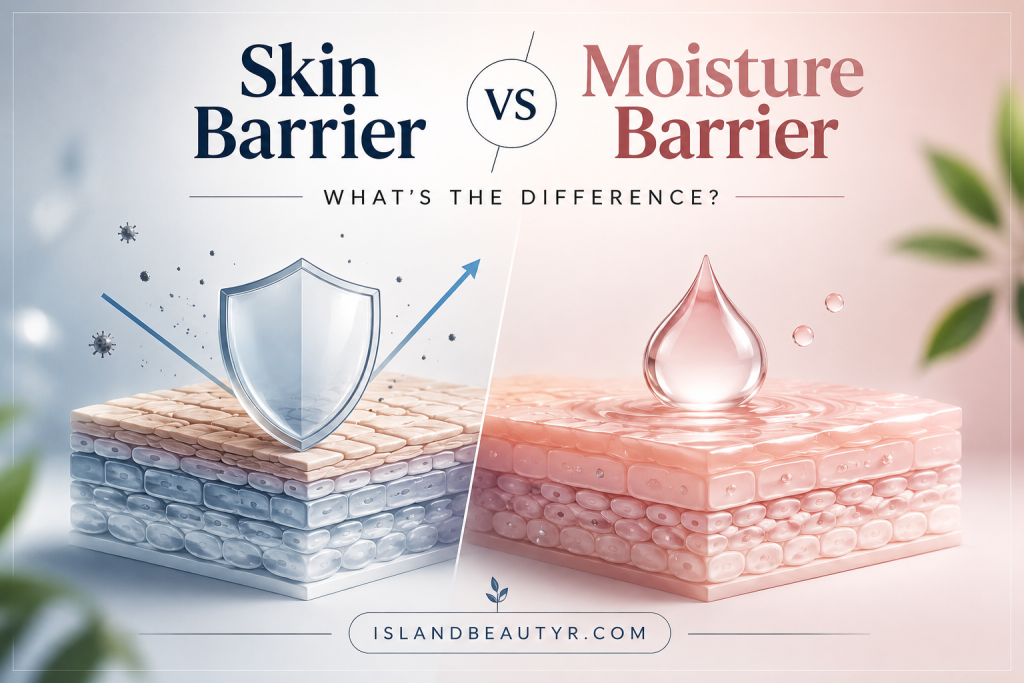
Skin Barrier vs Moisture Barrier: What’s the Real Difference?
If you’ve spent even a few minutes on skincare TikTok, Reddit, or YouTube, you’ve probably heard people talk about repairing the skin barrier or restoring the moisture barrier.
The confusing part?
Many beauty influencers use these terms as if they mean the same thing.
In reality, Skin Barrier vs Moisture Barrier is not a simple comparison. While the terms are closely related, they are not scientifically identical. Understanding the difference can help you choose the right skincare products, avoid unnecessary irritation, and build a routine that genuinely supports healthy skin.
In this dermatologist-backed guide, you’ll learn:
- What the skin barrier actually is
- What people really mean by “moisture barrier”
- The seven biggest scientific differences
- Signs of a damaged barrier
- How to repair each condition
- The biggest myths circulating online
Let’s start with the biology.
This is islandbeautyr.com, and I am Rasta Kafashan, the author of this website. I can help you better understand and become more aware of your skin, based on the most up-to-date scientific research. So, stay with us and follow islandbeautyr.com.
What Is the Skin Barrier?
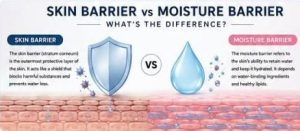
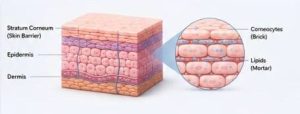
The skin barrier, also known as the stratum corneum, is the outermost protective layer of your skin.
Imagine a brick wall.
- The skin cells (corneocytes) are the bricks.
- Lipids—including ceramides, cholesterol, and fatty acids—are the mortar holding everything together.
Together, they perform several life-saving functions:
- Prevent excessive water loss
- Block bacteria
- Protect against pollution
- Reduce allergen penetration
- Defend against chemicals
- Maintain skin hydration
Without an intact skin barrier, your skin becomes vulnerable to dehydration, inflammation, infection, and accelerated aging. Numerous studies on skin barrier function have shown that maintaining an intact barrier is essential for preventing water loss, reducing inflammation, and protecting the body from environmental stressors.
What Is the Moisture Barrier?
Interestingly, “moisture barrier” isn’t an official dermatological term.
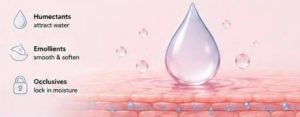
Instead, it’s a popular skincare phrase describing your skin’s ability to retain water.
When skincare brands mention repairing the moisture barrier, they are usually referring to improving:
- Skin hydration
- Lipid balance
- Natural Moisturizing Factors (NMF)
- Transepidermal Water Loss (TEWL)
In other words, the moisture barrier represents the hydration function of the skin barrier, not a completely separate anatomical structure.
Skin Barrier vs Moisture Barrier: Quick Comparison
| Feature | Skin Barrier | Moisture Barrier |
|---|---|---|
| Scientific term | Yes | No |
| Physical structure | Yes | No |
| Prevents infection | Yes | Indirectly |
| Controls water loss | Yes | Yes |
| Contains lipids | Yes | Refers to lipid function |
| Exists anatomically | Yes | Conceptual term |
| Dermatology textbooks | Yes | Rarely |
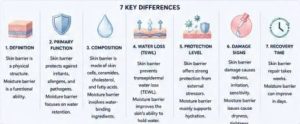
7 Scientific Differences Between Skin Barrier vs Moisture Barrier
1. One Is an Anatomical Structure
The skin barrier physically exists.
It consists of multiple layers of dead skin cells embedded in specialized lipids.
The moisture barrier is simply a way to describe how well this structure keeps water inside the skin.
2. The Skin Barrier Does More Than Hydration
A healthy skin barrier also protects against:
- UV damage
- Allergens
- Pathogens
- Mechanical injury
- Pollution
Hydration is only one of many functions.
3. Moisture Barrier Focuses on Water Retention
When people say their moisture barrier is damaged, they usually mean their skin cannot hold enough water.
This often results in:
- Tightness
- Dryness
- Flaking
- Rough texture
4. Skin Barrier Damage Increases TEWL
One of the biggest scientific measurements used by dermatologists is Transepidermal Water Loss (TEWL).
When the skin barrier becomes damaged, TEWL increases dramatically.
Water evaporates faster than the skin can replace it.
5. Different Ingredients Target Different Problems
For repairing the skin barrier:
- Ceramides
- Cholesterol
- Fatty acids
For improving hydration:
- Hyaluronic acid
- Glycerin
- Panthenol
- Sodium PCA
Many barrier repair creams combine both categories.
6. Symptoms Are Similar but Not Identical
Damaged Skin Barrier
- Burning
- Stinging
- Redness
- Increased sensitivity
- Acne flare-ups
- Eczema
Poor Moisture Retention
- Dryness
- Fine dehydration lines
- Tight feeling
- Dull complexion
7. Recovery Time Differs
Mildly dehydrated skin may recover within several days.
A severely damaged skin barrier may require 2–8 weeks, depending on severity and skincare habits.
What Damages the Skin Barrier?
The most common causes include:
- Over-exfoliation
- Retinoid overuse
- Harsh cleansers
- Alcohol-based skincare
- Excessive sun exposure
- Low humidity
- Hot showers
- Pollution
- Stress
- Aging
Signs Your Skin Barrier Is Damaged
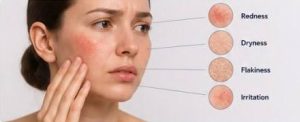
Watch for these warning signs:
- Persistent redness
- Itching
- Burning after applying moisturizer
- Sudden sensitivity
- Dry patches
- Flaking
- Acne despite dry skin
- Increased irritation from products you’ve always tolerated
How to Repair Your Skin Barrier
Dermatologists generally recommend a “barrier repair” routine:
Gentle Cleanser
Avoid sulfates and high-pH soaps.
Ceramide Moisturizer
Ceramides replace missing lipids.
Cholesterol + Fatty Acids
These restore the lipid matrix.
Niacinamide (2–5%)
Supports ceramide production and reduces inflammation.
Sunscreen
Daily SPF 30+ protects the recovering barrier.
Avoid Over-Exfoliation
Pause AHAs, BHAs, scrubs, and retinoids if your skin is inflamed.
Best Ingredients for Barrier Repair
| Ingredient | Benefit |
|---|---|
| Ceramides | Restore lipids |
| Cholesterol | Strengthens barrier |
| Fatty acids | Improve flexibility |
| Glycerin | Hydrates |
| Panthenol | Soothes irritation |
| Hyaluronic acid | Attracts water |
| Squalane | Prevents moisture loss |
| Colloidal oatmeal | Reduces inflammation |
Common Myths About Skin Barrier vs Moisture Barrier
Myth 1
“They’re completely different.”
False.
The moisture barrier is essentially the hydration function of the skin barrier.
Myth 2
“Only dry skin has barrier damage.”
False.
Oily skin can have severe barrier impairment.
Myth 3
“More exfoliation fixes dull skin.”
False.
Over-exfoliation is one of the leading causes of barrier damage.
Myth 4
“You only need moisturizer.”
Barrier repair often requires restoring lipids—not just adding water.
Frequently Asked Questions
Is the moisture barrier real?
The term is widely used in skincare marketing, but it is not an official anatomical structure in dermatology.
Can you permanently damage your skin barrier?
In most cases, no. With proper skincare, the barrier can regenerate over several weeks.
How long does barrier repair take?
Mild cases may improve within a week, while more severe damage can take 2–8 weeks.
Does hyaluronic acid repair the barrier?
Not directly. It improves hydration, but lipids such as ceramides are essential for rebuilding the skin barrier.
Conclusion
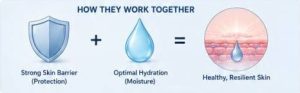
Understanding Skin Barrier vs Moisture Barrier helps separate scientific facts from marketing language. The skin barrier is the physical protective layer that shields your body and controls water loss, while the moisture barrier refers to how effectively it retains hydration.
For long-term skin health, focus on protecting the skin barrier with gentle cleansing, ceramide-rich moisturizers, daily sunscreen, and avoiding excessive exfoliation. When your barrier is healthy, your skin is better hydrated, more resilient, and less prone to irritation.
According to the American Academy of Dermatology, protecting the skin barrier is essential for maintaining healthy skin.