
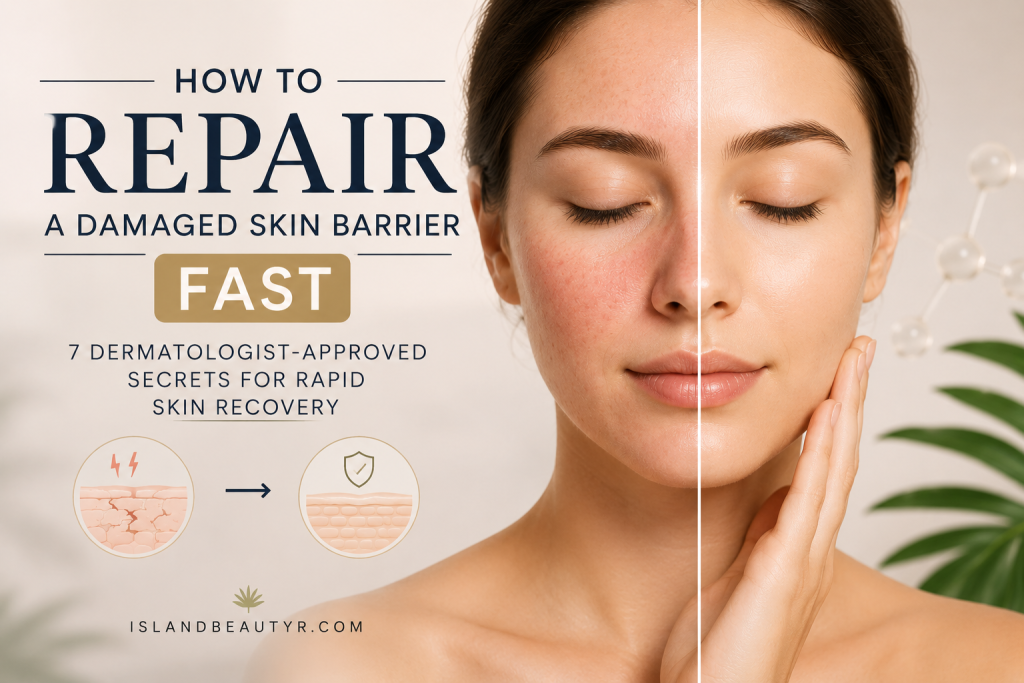
Why Skin Barrier Health Matters in Dermatology
The skin barrier plays a fundamental role in maintaining skin health. In dermatology, it is known as the stratum corneum, a structured layer responsible for preventing water loss and protecting against irritants, allergens, and microorganisms.
When this barrier becomes compromised, the skin may feel dry, sensitive, or inflamed. This condition is increasingly common due to overuse of active skincare ingredients, environmental stress, and improper routines.
Understanding how to repair a damaged skin barrier fast is essential not only for cosmetic improvement but also for restoring proper skin function.
This guide is based on dermatological principles and evidence-informed skincare practices designed to support safe and effective recovery.
This is islandbeautyr.com, and I am Rasta Kafashan, the author of this website. I can help you better understand and become more aware of your skin, based on the most up-to-date scientific research. So, stay with us and follow islandbeautyr.com.
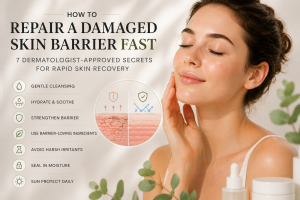
What Is a Damaged Skin Barrier? (Clinical Perspective)
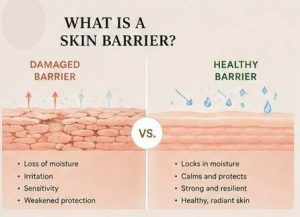
A damaged skin barrier occurs when the natural lipid matrix between skin cells is disrupted. This leads to increased transepidermal water loss (TEWL) and reduced protection against external irritants.
From a clinical standpoint, this condition is associated with:
- Impaired lipid structure (ceramides, cholesterol, fatty acids)
- Increased sensitivity and inflammation
- Reduced hydration retention
Common symptoms include redness, tightness, burning sensations, and increased reactivity to skincare products.
Common Causes of Skin Barrier Damage
Dermatologists commonly associate barrier impairment with several lifestyle and skincare factors:
1. Over-exfoliation
Frequent use of AHAs, BHAs, or physical scrubs can weaken the stratum corneum.
2. Harsh cleansing routines
High-pH or sulfate-based cleansers may disrupt natural lipids.
3. Excessive use of active ingredients
Retinoids, acids, and high-concentration vitamin C can lead to irritation when not properly balanced.
4. Environmental stressors
Cold weather, pollution, and UV exposure contribute to barrier breakdown.
5. Underlying skin conditions
Conditions such as eczema, dermatitis, and rosacea often involve compromised barrier function.
Scientific Principles Behind Skin Barrier Repair
Effective barrier recovery is based on three dermatological principles:
- Lipid restoration (rebuilding ceramides, cholesterol, fatty acids)
- Inflammation control
- Reduction of transepidermal water loss (TEWL)
Clinical studies show that topical formulations containing physiological lipids can significantly improve barrier recovery rates compared to basic moisturization alone.
How to Repair a Damaged Skin Barrier Fast: 7 Dermatologist-Recommended Steps
Step 1: Temporarily Discontinue Active Ingredients
To allow recovery, it is recommended to pause potentially irritating ingredients such as:
- Retinoids
- Exfoliating acids (AHA/BHA/PHA)
- Strong vitamin C formulations
This step reduces ongoing inflammation and allows the skin to stabilize.
Step 2: Use a Gentle, Low-pH Cleanser
A cleanser with a pH between 4.5 and 5.5 helps maintain the skin’s natural acid mantle.
Recommended characteristics:
- Fragrance-free
- Sulfate-free
- Non-stripping formulation
This supports natural lipid preservation.
Step 3: Focus on Hydration Support
Hydration plays a key role in early recovery. Ingredients such as:
- Glycerin
- Hyaluronic acid
- Beta-glucan
help increase water retention in the stratum corneum and improve skin comfort.
Step 4: Restore Essential Lipids (Core Step in Repair)
One of the most important steps in how to repair a damaged skin barrier fast is lipid replenishment.
Look for ingredients such as:
- Ceramides (NP, AP, EOP)
- Cholesterol
- Fatty acids
These components are structurally similar to natural skin lipids and support barrier reconstruction.
Step 5: Apply Occlusive Moisturizers to Reduce Water Loss
Occlusive agents help prevent transepidermal water loss (TEWL):
- Petrolatum
- Dimethicone
- Squalane
This creates a protective layer that allows internal healing processes to continue effectively.
Step 6: Reduce Inflammation with Soothing Agents
Inflammation delays barrier recovery. Evidence-supported soothing ingredients include:
- Panthenol (Vitamin B5)
- Niacinamide (2–5%)
- Allantoin
- Centella asiatica extract
These compounds help improve skin tolerance and comfort.
Step 7: Daily UV Protection
Ultraviolet radiation can impair barrier recovery and prolong inflammation.
- Use SPF 30 or higher
- Prefer mineral-based sunscreens for sensitive skin
- Reapply during prolonged exposure
Photoprotection is essential during the healing phase.
Expected Recovery Timeline (Evidence-Based Range)
Recovery time varies depending on severity:
- Mild impairment: 3–7 days
- Moderate damage: 1–3 weeks
- Severe barrier disruption: 4+ weeks
Consistency in routine is a key factor influencing recovery speed.
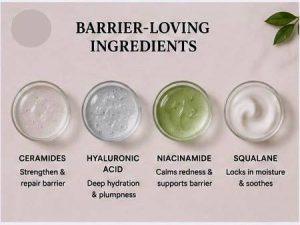
Ingredients Supported by Dermatological Research
Ceramides
Essential structural lipids that improve barrier integrity.
Niacinamide
Enhances natural ceramide production and reduces inflammation.
Panthenol
Supports epidermal healing and hydration retention.
Squalane
Mimics natural sebum and improves skin softness.
Colloidal oatmeal
Helps reduce irritation and supports skin comfort.
What to Avoid During Barrier Recovery
To support safe healing:
- Avoid over-exfoliation
- Avoid fragranced products
- Avoid frequent product switching
- Avoid combining multiple active ingredients
A simplified routine is more effective during this phase.
Basic Dermatologist-Informed Routine
Morning:
- Gentle cleanser (or water rinse if needed)
- Hydrating serum (glycerin-based)
- Ceramide moisturizer
- Sunscreen SPF 30+
Evening:
- Gentle cleanser
- Soothing serum (niacinamide or panthenol)
- Barrier-repair moisturizer
Optional: occlusive layer if skin is very dry
When to Seek Medical Advice
Consult a dermatologist if:
- Symptoms persist beyond 4–6 weeks
- Severe irritation or swelling occurs
- Suspected eczema, rosacea, or dermatitis is present
Professional evaluation ensures accurate diagnosis and treatment.
Conclusion
Learning how to repair a damaged skin barrier fast requires a structured and science-based approach rather than complex routines. The focus should remain on lipid restoration, inflammation control, and barrier protection.
With consistent care, most individuals experience noticeable improvement within days to weeks.
Frequently Asked Questions (FAQ)
1. How to repair a damaged skin barrier fast in the most effective way?
The most effective way to understand how to repair a damaged skin barrier fast is to immediately stop all irritating skincare products and focus on restoring the skin’s natural lipid balance. Dermatologists recommend using a simple routine based on gentle cleansing, hydrating ingredients like glycerin, and barrier-repair creams containing ceramides, cholesterol, and fatty acids. These components directly support the structure of the stratum corneum, which is essential for fast recovery.
Consistency is more important than complexity. A minimal routine allows the skin to reduce inflammation and naturally rebuild its protective layer within days to weeks, depending on severity.
2. How long does it take to repair a damaged skin barrier fast?
The timeline for how to repair a damaged skin barrier fast varies depending on how severe the damage is. Mild cases may improve within 3–7 days, while moderate damage can take 1–3 weeks. In more severe cases, full recovery may take several weeks.
The speed of recovery depends on factors such as skincare routine, environmental exposure, and whether irritating products are completely avoided during healing. Supporting the skin with ceramide-based moisturizers and proper hydration significantly improves recovery time.
3. What are the fastest ingredients to repair a damaged skin barrier?
When focusing on how to repair a damaged skin barrier fast, certain ingredients are considered highly effective in dermatology:
- Ceramides: rebuild the skin’s natural lipid structure
- Niacinamide: supports ceramide production and reduces inflammation
- Panthenol (Vitamin B5): improves healing and hydration
- Squalane: mimics natural skin oils and prevents water loss
- Colloidal oatmeal: calms irritation and supports sensitive skin
These ingredients work together to restore barrier function and reduce transepidermal water loss (TEWL), which is a key factor in skin damage.
4. What should you avoid when trying to repair a damaged skin barrier fast?
To successfully understand how to repair a damaged skin barrier fast, it is just as important to know what to avoid. Dermatologists strongly recommend avoiding:
- Exfoliating acids (AHA, BHA, PHA)
- Retinoids and strong vitamin C
- Physical scrubs or harsh cleansing
- Fragranced skincare products
- Frequent switching of skincare routines
These factors can increase inflammation and delay recovery by further disrupting the stratum corneum.
5. Can a damaged skin barrier heal on its own?
Yes, in many cases a damaged skin barrier can heal on its own, but the process may be slow without proper care. When learning how to repair a damaged skin barrier fast, supporting the skin with hydration and lipid replacement significantly accelerates natural healing.
Without intervention, the skin may take longer to restore its protective function, especially if irritants continue to be used. A simplified skincare routine improves recovery efficiency and reduces discomfort during the healing phase.
6. What does a damaged skin barrier feel like?
A damaged skin barrier often presents with noticeable symptoms such as:
- Tight or dry feeling skin
- Burning or stinging after applying products
- Redness or inflammation
- Increased sensitivity to skincare
- Breakouts or uneven texture
These symptoms indicate that the skin’s protective barrier is compromised. Understanding these signs is important when determining how to repair a damaged skin barrier fast before the condition worsens.
7. Is it safe to use active ingredients during barrier repair?
In most cases, it is not recommended to use strong active ingredients when trying to repair a damaged skin barrier fast. Active compounds such as retinoids and exfoliating acids can increase irritation and slow down recovery.
However, mild supportive ingredients like niacinamide or panthenol may still be used because they help calm inflammation and support barrier repair. The key is to avoid overloading the skin and focus on recovery rather than treatment of other concerns during this period.
8. What is the best skincare routine to repair a damaged skin barrier fast?
A simple and consistent routine is the most effective approach. Dermatologists usually recommend:
Morning:
- Gentle cleanser or water rinse
- Hydrating serum (glycerin-based)
- Ceramide moisturizer
- Sunscreen SPF 30+
Evening:
- Gentle cleanser
- Barrier-repair moisturizer
- Optional occlusive layer (for severe dryness)
This routine supports hydration, reduces irritation, and strengthens the skin barrier over time.
9. Why is my skin barrier damaged so easily?
A skin barrier can become easily damaged due to modern skincare habits and environmental stress. Overuse of exfoliants, harsh cleansers, pollution, and weather changes all contribute to weakening the stratum corneum.
When studying how to repair a damaged skin barrier fast, it is equally important to understand prevention. Strengthening the barrier over time with ceramide-rich products and avoiding over-treatment helps reduce future damage.
10. Can I wear makeup while repairing a damaged skin barrier?
Makeup can be used during barrier repair, but it should be minimal and non-irritating. Lightweight, non-comedogenic products are safer options. However, heavy makeup may slow down recovery if the skin is highly sensitive.
When focusing on how to repair a damaged skin barrier fast, dermatologists generally recommend allowing the skin to breathe as much as possible during the early healing phase.