
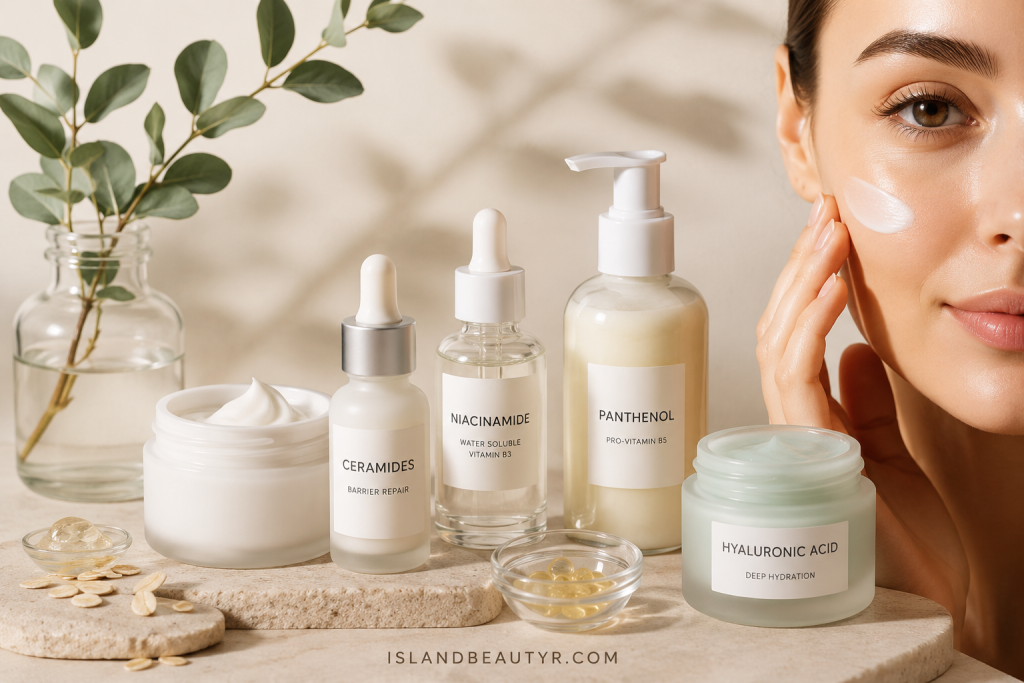
11 Powerful Ingredients for Skin Barrier Repair Backed by Science (2026 Guide)
A healthy skin barrier is the foundation of strong, resilient, and glowing skin. When the skin barrier becomes damaged, symptoms such as dryness, irritation, redness, sensitivity, and increased water loss can develop. Understanding the best ingredients for skin barrier repair can help you restore your skin’s natural protective function and maintain long-term skin health.
In this science-based guide, we will explore the best ingredients for skin barrier repair, how they work, and why dermatologists frequently recommend them for damaged or compromised skin.
This is islandbeautyr.com, and I am Rasta Kafashan, the author of this website. I can help you better understand and become more aware of your skin, based on the most up-to-date scientific research. So, stay with us and follow islandbeautyr.com.
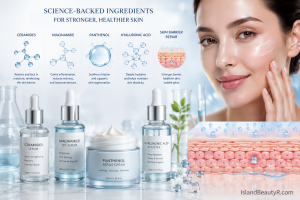
What Is the Skin Barrier?
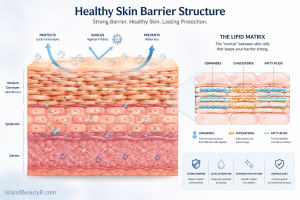
The skin barrier, also known as the stratum corneum, is the outermost layer of the skin. It acts as a protective shield that prevents moisture loss while defending against environmental stressors, allergens, pollutants, and harmful microorganisms.
When the skin barrier is compromised by over-exfoliation, harsh skincare products, UV exposure, pollution, or aging, it struggles to retain moisture and becomes more vulnerable to irritation.
This is why choosing the best ingredients for skin barrier repair is essential for maintaining healthy skin.
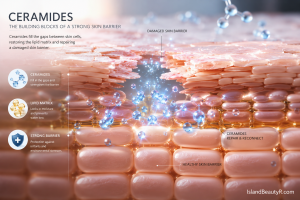
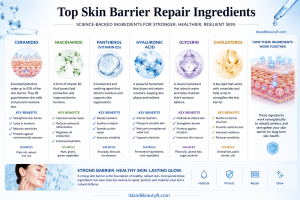
1. Ceramides
Ceramides are naturally occurring lipids that make up approximately 50% of the skin barrier’s structure.
Benefits:
- Strengthen the skin barrier.
- Reduce transepidermal water loss (TEWL)
- Improve hydration
- Decrease sensitivity
Ceramides are widely considered among the best ingredients for skin barrier repair because they directly replenish the lipids that damaged skin loses.
2. Niacinamide
Niacinamide, a form of Vitamin B3, is one of the most researched skincare ingredients available.
Benefits:
- Increases ceramide production
- Reduces inflammation
- Improves barrier function
- Supports hydration
Research shows that niacinamide helps the skin produce essential lipids, making it one of the best ingredients for skin barrier repair in both dry and sensitive skin types.
3. Panthenol (Provitamin B5)
Panthenol is known for its soothing and moisturizing properties.
Benefits:
- Accelerates barrier recovery
- Reduces redness
- Improves moisture retention
- Supports skin healing
For individuals dealing with irritation and dryness, panthenol remains one of the best ingredients for skin barrier repair due to its gentle yet effective action.
4. Hyaluronic Acid
Hyaluronic acid is a powerful humectant capable of attracting large amounts of water.
Benefits:
- Deep hydration
- Improved skin elasticity
- Reduced dehydration
- Enhanced barrier resilience
Although it does not rebuild the barrier directly, it supports recovery and complements other best ingredients for skin barrier repair.
5. Cholesterol
Cholesterol is a naturally occurring component of healthy skin.
Benefits:
- Restores barrier lipids
- Improves skin flexibility
- Reduces moisture loss
- Enhances barrier recovery
Studies suggest that formulations containing ceramides, cholesterol, and fatty acids closely mimic the skin’s natural lipid composition.
6. Fatty Acids
Essential fatty acids play a vital role in maintaining skin structure.
Benefits:
- Replenish lost lipids
- Improve hydration
- Reduce inflammation
- Support long-term barrier integrity.
Fatty acids are often included alongside other best ingredients for skin barrier repair to maximize effectiveness.
7. Colloidal Oatmeal
Colloidal oatmeal has been used for centuries to soothe irritated skin.
Benefits:
- Calms itching
- Reduces inflammation
- Strengthens the skin barrier
- Supports hydration
It is especially beneficial for eczema-prone and sensitive skin.
8. Squalane
Squalane is a stable lipid that closely resembles the skin’s natural sebum.
Benefits:
- Prevents moisture loss
- Softens skin
- Supports barrier recovery
- Non-comedogenic hydration
Its excellent compatibility with the skin makes it one of the best ingredients for skin barrier repair for all skin types.
9. Centella Asiatica
Centella Asiatica is a medicinal plant rich in bioactive compounds.
Benefits:
- Promotes wound healing
- Reduces redness
- Supports collagen production
- Calms irritation
Many dermatologists recommend Centella-containing products during barrier recovery periods.
10. Glycerin
Glycerin remains one of the most effective humectants in skincare.
Benefits:
- Attracts water into the skin
- Enhances hydration
- Supports barrier function
- Improves skin softness
Its affordability and effectiveness make it one of the best ingredients for skin barrier repair in both premium and budget-friendly products.
11. Urea
At lower concentrations, urea is an exceptional moisturizing ingredient.
Benefits:
- Improves hydration
- Strengthens barrier function
- Softens rough skin
- Reduces dryness
Urea-containing formulations are frequently recommended for extremely dry and compromised skin.
Comparison of the Best Ingredients for Skin Barrier Repair
| Ingredient | Main Benefit | Best For |
|---|---|---|
| Ceramides | Replenishes skin lipids | Dry and damaged skin |
| Niacinamide | Boosts ceramide production | Sensitive and oily skin |
| Panthenol | Soothes irritation | Red and inflamed skin |
| Hyaluronic Acid | Increases Hydration | Dehydrated skin |
| Cholesterol | Supports barrier recovery | Compromised skin barrier |
| Fatty Acids | Restores lipid balance | Very dry skin |
| Colloidal Oatmeal | Calms Irritation | Eczema-prone skin |
| Squalane | Prevents moisture loss | All skin types |
| Centella Asiatica | Promotes healing | Sensitive skin |
| Glycerin | Attracts moisture | Dehydrated skin |
| Urea | Softens and hydrates | Rough, flaky skin |
Ingredients to Avoid During Skin Barrier Repair
While focusing on the best ingredients for skin barrier repair, it is equally important to avoid ingredients that may worsen barrier damage:
- High concentrations of alcohol
- Strong exfoliating acids
- Excessive retinoid use
- Harsh physical scrubs
- Highly fragranced products
Temporarily minimizing these ingredients can significantly accelerate recovery.
How to Build a Barrier Repair Routine
A simple barrier-focused routine may include:
Morning
- Gentle cleanser
- Niacinamide serum
- Ceramide-rich moisturizer
- Broad-spectrum SPF 30+
Evening
- Gentle cleanser
- Panthenol or Centella serum
- Moisturizer containing ceramides, cholesterol, and fatty acids
Consistency is often more important than using numerous products.
Frequently Asked Questions
What are the best ingredients for skin barrier repair?
The best ingredients for skin barrier repair include ceramides, niacinamide, panthenol, cholesterol, fatty acids, glycerin, and hyaluronic acid. These ingredients help restore moisture, strengthen the skin barrier, and reduce irritation.
How long does it take to repair a damaged skin barrier?
Most people notice improvements within 2 to 6 weeks, depending on the severity of the damage and the consistency of their skincare routine.
Are ceramides or hyaluronic acid better for skin barrier repair?
Ceramides directly rebuild the skin barrier by replacing lost lipids, while hyaluronic acid mainly improves hydration. For optimal results, many dermatologists recommend using both together.
Can niacinamide repair the skin barrier?
Yes. Niacinamide supports the production of ceramides and other essential lipids, helping strengthen and repair the skin barrier over time.
What should I avoid when repairing my skin barrier?
Avoid harsh exfoliants, overuse of retinoids, strong acids, alcohol-based products, and heavily fragranced skincare products until your skin barrier has recovered.
Conclusion
Choosing the best ingredients for skin barrier repair can dramatically improve skin hydration, resilience, and overall health. Scientific evidence consistently supports the use of ingredients such as ceramides, niacinamide, panthenol, cholesterol, fatty acids, and glycerin as key components of effective barrier repair strategies.
If your skin frequently feels dry, irritated, or sensitive, incorporating the best ingredients for skin barrier repair into your daily routine can help restore optimal barrier function and support healthier skin over time.