
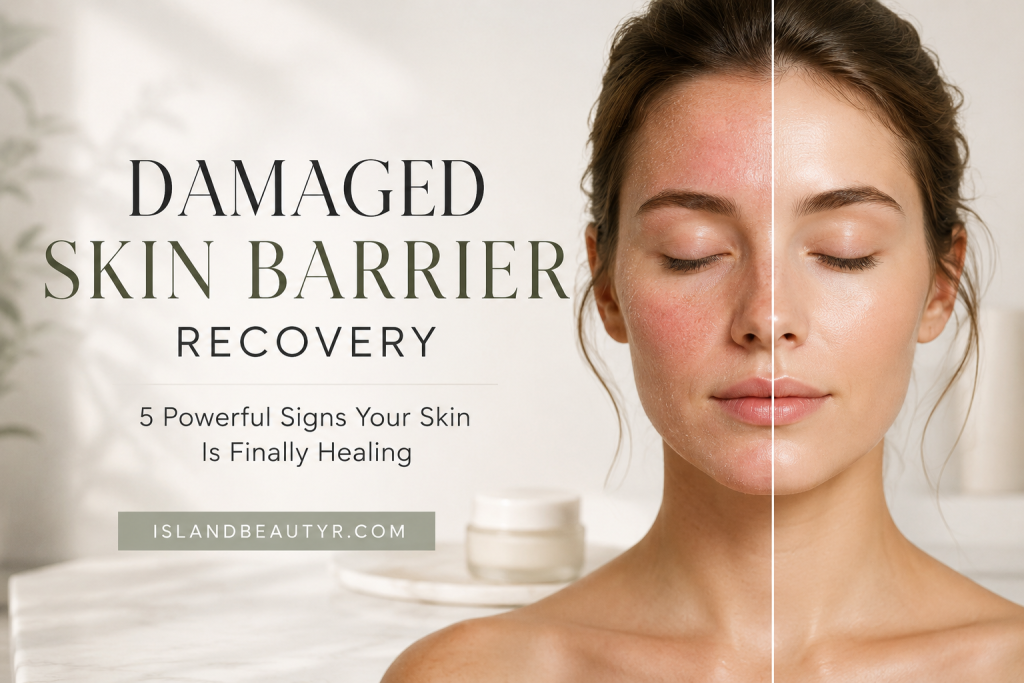
Damaged Skin Barrier Recovery: 5 Powerful Signs Your Skin Is Finally Healing
Introduction
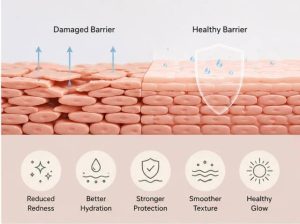
A healthy skin barrier is essential for maintaining hydration, protecting against environmental stressors, and preventing inflammation. When this barrier becomes damaged, the skin enters a fragile state characterized by redness, sensitivity, dryness, breakouts, and a compromised ability to retain moisture.
This condition is more common than most people realize, especially in individuals who use active skincare ingredients such as retinoids, exfoliating acids, or harsh cleansers without proper balance.
Understanding damaged skin barrier recovery is critical because many people mistakenly continue aggressive skincare routines even when their skin is already compromised. This significantly delays healing and can worsen inflammation.
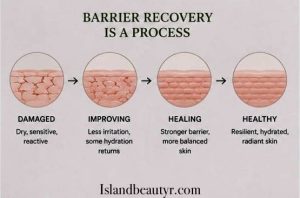
The skin barrier has a strong natural ability to repair itself, but the process is not instant. It requires time, reduced irritation, and consistent support through barrier-repairing ingredients.
In this article, we will break down exactly what damaged skin barrier recovery means, why it takes time, and the 5 most reliable signs that your skin is finally healing.
This is islandbeautyr.com, and I am Rasta kafashan, author of this website. I can help you better understand and become more aware of your skin, based on the most up-to-date scientific research. So, stay with us and follow islandbeautyr.com.
What Is Damaged Skin Barrier Recovery?
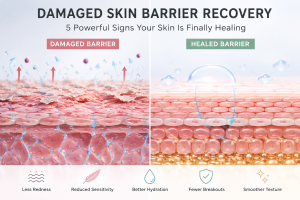
Damaged skin barrier recovery refers to the biological process in which the outermost layer of the skin (the stratum corneum) restores its structural integrity and protective function.
A healthy skin barrier is composed primarily of:
- Ceramides
- Cholesterol
- Free fatty acids
These lipids function like a protective “mortar” that holds skin cells together, forming a strong defensive layer.
When this barrier is damaged, several changes occur:
- Increased transepidermal water loss (TEWL)
- Higher penetration of irritants and allergens
- Increased inflammation and redness
- Heightened nerve sensitivity
As a result, the skin becomes reactive, dehydrated, and inconsistent in appearance.
The process of damaged skin barrier recovery involves restoring lipid balance, reducing inflammation, and rebuilding the structural cohesion of the skin’s outer layer. This process is gradual and depends heavily on how well the skin is supported during healing.
Why Skin Barrier Healing Takes Time
One of the most misunderstood aspects of skin health is the timeline of recovery. Many people expect immediate improvement after stopping active products, but true damaged skin barrier recovery is a biological remodeling process that cannot be accelerated instantly.
There are several reasons why healing takes time:
1. Lipid Rebuilding Is Gradual
The skin must naturally synthesize ceramides, cholesterol, and fatty acids in the correct ratio. This process is slow and cannot be forced externally.
2. Inflammation Must Fully Calm Down
Even after irritation stops, low-level inflammation may persist in the skin. During damaged skin barrier recovery, the immune system gradually returns to balance.
3. Microbiome Needs Stabilization
The skin’s microbiome often becomes imbalanced when the barrier is damaged. Recovery includes restoring a healthy microbial environment.
4. Cellular Turnover Must Normalize
Skin cells regenerate in cycles, and full structural recovery requires multiple cycles of renewal.
Because of these combined processes, damaged skin barrier recovery typically takes:
- 1–2 weeks (mild cases)
- 3–6 weeks (moderate cases)
- 2–3 months or longer (severe cases)
5 Powerful Signs Your Skin Is Finally Healing
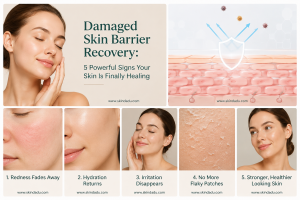
Recognizing early and progressive signs of damaged skin barrier recovery helps prevent over-treatment and ensures proper skincare decisions during healing.
1. Redness Becomes Less Frequent and Less Intense
One of the earliest indicators of damaged skin barrier recovery is a visible reduction in redness.
When the barrier is compromised, inflammation remains active, causing persistent flushing and uneven skin tone. As healing begins, inflammatory activity gradually decreases.
You may notice:
- Redness appears less often
- Flushing episodes are shorter
- Skin looks calmer after cleansing
This indicates that inflammatory pathways are stabilizing, even if full recovery has not yet occurred.
2. Sensitivity and Stinging Start to Decrease
A damaged barrier exposes nerve endings, making the skin highly reactive to even mild products or water.
During damaged skin barrier recovery, nerve sensitivity slowly normalizes.
Signs include:
- Reduced stinging when applying skincare
- Less reaction to temperature changes
- Improved tolerance to gentle products
This is one of the most reliable indicators that damaged skin barrier recovery is progressing biologically.
3. Hydration Improves, and Tightness Reduces
Dryness and tightness occur due to increased transepidermal water loss (TEWL), which is a hallmark of barrier dysfunction.
As damaged skin barrier recovery progresses, lipid structure improves, allowing the skin to retain water more effectively.
Improvements include:
- Less tight feeling after cleansing
- Reduced flaking or rough patches
- More stable hydration throughout the day
This reflects functional restoration of the barrier’s moisture-retention ability.
4. Breakouts Become Less Reactive and More Stable
Barrier damage often causes unpredictable, inflammation-driven breakouts that are not typical acne.
As recovery continues, the skin becomes more stable and less reactive to triggers.
You may observe:
- Fewer sudden breakouts
- Reduced sensitivity-induced pimples
- More predictable skin behavior
This indicates normalization of immune response during damaged skin barrier recovery.
5. Skin Texture Becomes Smoother and More Even
Texture improvement is usually a later-stage sign of damaged skin barrier recovery.
When the barrier is damaged, the skin surface appears rough, uneven, or dehydrated. As healing progresses, structural integrity improves.
Visible changes include:
- Smoother skin surface
- More even tone and reflection
- Reduced dry or rough patches
This suggests deeper restoration of the stratum corneum.
Common Mistakes That Slow Recovery
Even when someone starts the process of damaged skin barrier recovery, certain habits can unintentionally delay or completely reset healing progress. The skin barrier is sensitive during this phase, and small mistakes can have a disproportionately large impact.
1. Over-cleansing the skin
One of the most common mistakes is washing the face too frequently or using harsh cleansers. While cleanliness is important, excessive cleansing strips natural lipids from the skin, making it harder for damaged skin barrier recovery to progress.
2. Reintroducing active ingredients too early
Many people restart retinoids, AHAs, BHAs, or vitamin C as soon as they see slight improvement. However, the barrier is still fragile at this stage. Early reintroduction of actives often restarts inflammation and delays damaged skin barrier recovery significantly.
3. Using too many products at once
Layering multiple serums and treatments can overwhelm a healing barrier. During damaged skin barrier recovery, minimal skincare is more effective than complex routines.
4. Constantly changing skincare products
Switching products frequently prevents the skin from stabilizing. The barrier needs consistency to rebuild itself properly during damaged skin barrier recovery.
5. Ignoring subtle irritation signals
Mild stinging, tightness, or redness are often ignored, but these are early warning signs. Continuing irritating routines can prolong damaged skin barrier recovery and worsen sensitivity over time.
How to Support Faster Healing
Supporting damaged skin barrier recovery is not about adding more products but about reducing stress on the skin and restoring essential components.
1. Simplify your skincare routine
A minimal routine is the foundation of healing:
- Gentle cleanser
- Barrier-repair moisturizer
- Sunscreen (daytime only)
This reduces external stress and allows damaged skin barrier recovery to progress naturally.
2. Focus on barrier-repair ingredients
Certain ingredients directly support lipid reconstruction and hydration balance:
- Ceramides (restore structural integrity)
- Cholesterol (supports lipid balance)
- Fatty acids (strengthen barrier cohesion)
- Panthenol (soothes irritation)
- Glycerin (improves hydration retention)
These ingredients play a central role in damaged skin barrier recovery.
3. Avoid exfoliation temporarily
Chemical and physical exfoliation should be paused during active healing. Removing dead skin cells is unnecessary when the barrier itself is compromised. Allowing the skin to rebuild naturally is essential for proper damaged skin barrier recovery.
4. Maintain consistent hydration
Hydration does not mean only drinking water—it also means supporting skin moisture levels externally with humectants and occlusives. This helps reduce transepidermal water loss, which is a key factor in damaged skin barrier recovery.
5. Be patient with the process
The most important factor in damaged skin barrier recovery is time. Even with perfect skincare, biological repair follows its own timeline and cannot be rushed.
FAQ
What is damaged skin barrier recovery?
Damaged skin barrier recovery is the process of restoring the skin’s outer protective layer by rebuilding lipids, reducing inflammation, and normalizing hydration levels.
How long does damaged skin barrier recovery take?
It depends on severity:
- Mild cases: 1–2 weeks
- Moderate cases: 3–6 weeks
- Severe cases: 2–3 months or longer
What are the fastest ways to support recovery?
The fastest way to support damaged skin barrier recovery is to simplify skincare, avoid exfoliation, and use barrier-repair ingredients consistently.
Can I wear makeup during recovery?
Yes, but it should be non-irritating and lightweight. Heavy or comedogenic products may slow damaged skin barrier recovery.
Should I stop all active ingredients?
Yes, temporarily stopping strong actives like acids and retinoids is recommended until damaged skin barrier recovery stabilizes.

Conclusion
Recognizing the signs of damaged skin barrier recovery is essential for preventing further skin damage and ensuring proper healing.
When redness decreases, sensitivity improves, hydration returns, breakouts stabilize, and texture becomes smoother, the skin is clearly progressing through damaged skin barrier recovery.
The most important factor in this process is patience. The skin is biologically capable of restoring itself, but only when it is given the right environment—minimal irritation, consistent care, and time.
References
- Proksch, E. et al. (2008). The skin barrier function: structure and regulation.
- Elias, P. M. (2005). Stratum corneum defensive functions. Journal of Investigative Dermatology.
- Madison, K. C. (2003). Barrier function of the skin: “la raison d’être” of the epidermis.
- Lodén, M. (2012). Role of topical emollients and moisturizers in the treatment of dry skin barrier disorders.
Medical Disclaimer
This article is for educational purposes only and is not intended to diagnose, treat, or replace professional medical advice. If you experience severe skin irritation, persistent inflammation, or worsening symptoms, consult a qualified dermatologist for proper evaluation and treatment.