
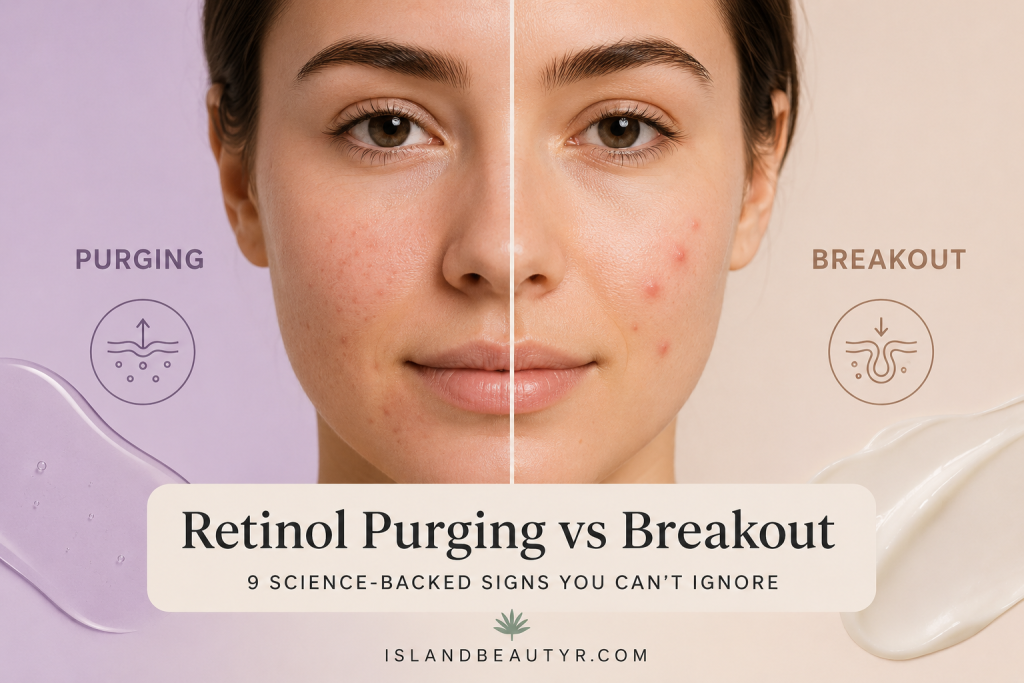
Retinol Purging vs Breakout: 9 Critical Differences You Must Know
Retinol is one of the most researched skincare ingredients in dermatology. It has earned a reputation for improving acne, reducing fine lines, increasing collagen production, and enhancing overall skin texture. However, many people experience an unexpected reaction shortly after introducing retinol into their skincare routine.
Suddenly, new pimples appear. Existing blemishes seem more noticeable. Redness and irritation may increase. This often leads to an important question:
Is this retinol purging, or am I having a breakout?
Understanding the difference between retinol purging vs breakout is essential because the correct response depends entirely on what is happening beneath the skin’s surface. Stopping retinol during a normal purge could prevent you from experiencing its long-term benefits, while continuing a product that is causing a true breakout may worsen your skin condition.
In this science-based guide, we will explain the biological mechanisms behind retinol purging, how it differs from a breakout, and the nine most important signs that help distinguish between the two.
This is islandbeautyr.com, and I am Rasta Kafashan, the author of this website. I can help you better understand and become more aware of your skin, based on the most up-to-date scientific research. So, stay with us and follow islandbeautyr.com.
What Is Retinol Purging?
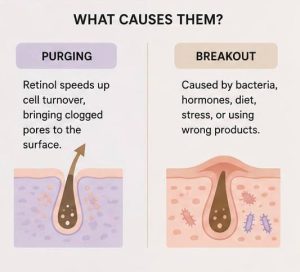
Retinol belongs to the retinoid family, vitamin A derivatives known for accelerating skin cell turnover.
Normally, skin cells renew themselves approximately every 28–40 days, depending on age and skin condition. Retinol speeds up this process by encouraging older skin cells to shed more rapidly while stimulating the production of fresh cells underneath.
As this accelerated turnover occurs, microscopic, clogged pores (microcomedones) that were already developing beneath the skin surface are pushed outward faster than usual.
This process is known as retinol purging.
Importantly, purging does not create new acne. Instead, it reveals existing congestion more quickly than would naturally occur.
What Is a Retinol Breakout?
A retinol breakout is different.
Rather than speeding up the appearance of existing acne, a breakout occurs when the skin reacts negatively to a product or routine change.
Potential causes include:
- Irritation-induced inflammation
- Allergic reactions
- Overuse of retinol
- Damaged skin barrier
- Comedogenic ingredients in formulations
- Incompatible skincare products
Unlike purging, a breakout indicates that something is actively contributing to new blemish formation.
Why People Confuse Retinol Purging and Breakouts
The confusion is understandable because both conditions can involve:
- Pimples
- Redness
- Skin sensitivity
- Temporary worsening of skin appearance
However, several important differences can help determine whether you are experiencing retinol purging vs. a breakout.
9 Key Differences Between Retinol Purging and Breakout
1. Timing After Starting Retinol
One of the most reliable indicators is when symptoms begin.
Retinol purging typically starts within the first few weeks after introducing retinol into your routine.
Most users notice purging between:
- Week 1
- Week 2
- Week 4
A breakout, however, can occur at any point and may continue indefinitely if the underlying cause remains unresolved.
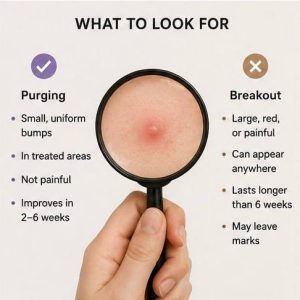
Purging:
Appears soon after starting retinol.
Breakout:
Can appear anytime and often persists
2. Location of the Acne
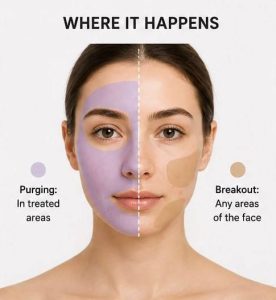
Retinol purging usually occurs in areas where acne commonly develops.
For example:
- Forehead
- Chin
- Jawline
- Nose
These are locations where clogged pores already existed beneath the surface.
A breakout may appear in entirely new areas that were previously clear.
Purging:
Occurs in familiar acne-prone zones.
Breakout:
May develop in unusual or previously unaffected areas.
3. Duration
The duration of symptoms is another major clue.
Research and dermatology guidelines suggest that retinol purging generally resolves within one skin renewal cycle.
Most purges last:
- 4 to 8 weeks
Some individuals may experience symptoms for up to 12 weeks.
A breakout often continues beyond this period without significant improvement.
Purging:
Temporary and self-limiting.
Breakout:
Persistent or progressively worsening.
4. Type of Lesions
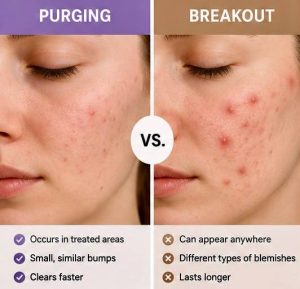
Purging tends to produce acne lesions similar to those already experienced before treatment.
Examples include:
- Whiteheads
- Blackheads
- Small inflammatory papules
Breakouts can introduce different lesion types, including:
- Painful cysts
- Nodules
- Severe inflammatory acne
Purging:
Existing acne patterns become more visible.
Breakout:
New or unusual acne types emerge.
5. Skin Improvement Between Flare-Ups
During retinol purging, many people notice subtle signs of improvement despite temporary blemishes.
For example:
- Smoother skin texture
- Reduced congestion
- More even tone
A breakout usually lacks these positive changes.
Purging:
Overall skin quality gradually improves.
Breakout:
Skin condition continues deteriorating.
6. Associated Irritation
Although retinol purging can involve mild irritation, excessive symptoms suggest another problem.
Warning signs include:
- Severe burning
- Extreme redness
- Intense itching
- Significant swelling
These reactions are more consistent with irritation or sensitivity rather than a typical purge.
Purging:
Mild irritation is possible.
Breakout:
Often accompanied by significant inflammation.
7. Response to Continued Use
One hallmark of retinol purging vs breakout is how the skin responds over time.
When purging occurs, the skin usually adapts gradually.
With consistent use:
- Fewer blemishes appear
- Skin becomes smoother
- Acne decreases
If breakouts continue despite proper retinol use, another factor may be responsible.
Purging:
Improves with time.
Breakout:
Persists or worsens.
8. Impact on the Skin Barrier
Retinol can compromise the skin barrier when used incorrectly.
Signs of barrier disruption include:
- Tightness
- Excessive dryness
- Peeling
- Stinging
Barrier damage often triggers inflammation that resembles acne.
This situation is not true purging.
Instead, it represents irritation-induced breakouts caused by excessive retinol exposure.
Purging:
Skin barrier remains relatively stable.
Breakout:
Often associated with barrier dysfunction.
9. Overall Trend
Looking at the bigger picture is often the best approach.
Ask yourself:
“Is my skin slowly improving despite temporary blemishes?”
If the answer is yes, you are likely experiencing purging.
If your skin becomes increasingly inflamed with no signs of progress, a breakout is more likely.
Purging:
Improvement trend.
Breakout:
Declining trend.
How Long Does Retinol Purging Last?
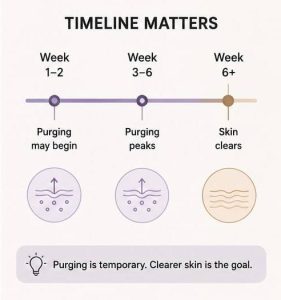
One of the most searched questions related to retinol purging vs breakout is how long the purge phase lasts.
For most individuals:
| Stage | Timeline |
|---|---|
| Initial Adjustment | Week 1–2 |
| Peak Purging | Week 2–6 |
| Improvement Phase | Week 6–8 |
| Visible Benefits | Week 8–12 |
Individual responses vary depending on:
- Retinol concentration
- Skin sensitivity
- Existing acne severity
- Frequency of application
How to Minimize Retinol Purging:
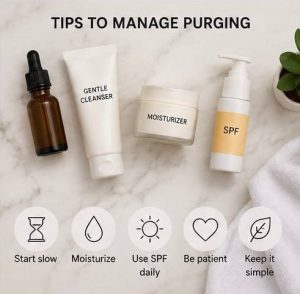
Although purging cannot always be avoided, several evidence-based strategies may reduce its intensity.
Start Slowly
Begin with retinol only 2–3 nights per week.
Gradually increase usage as tolerance develops.
Use the Sandwich Method
Apply:
- Moisturizer
- Retinol
- Moisturizer
This technique helps reduce irritation while maintaining efficacy.
Prioritize Skin Barrier Support
Look for ingredients such as:
- Ceramides
- Glycerin
- Hyaluronic acid
- Panthenol
These ingredients help maintain barrier integrity during retinol adaptation.
Avoid Harsh Combinations
During the adjustment phase, avoid excessive use of:
- Strong exfoliating acids
- Scrubs
- High-strength benzoyl peroxide
Combining multiple irritating products may worsen inflammation.
When Should You Stop Using Retinol?
Retinol purging should not automatically require discontinuation.
However, consider pausing use if you experience:
- Severe burning
- Significant swelling
- Rash-like reactions
- Persistent worsening after 12 weeks
- Signs of allergic dermatitis
Consulting a dermatologist is recommended if symptoms become severe or prolonged.
The Science Behind Retinol’s Benefits
The temporary inconvenience of retinol purging often leads to long-term improvements because retinol has been shown to:
- Increase collagen synthesis
- Normalize keratinization
- Reduce acne lesions
- Improve photoaging
- Enhance epidermal renewal
- Reduce fine lines and wrinkles
These mechanisms explain why retinol remains one of the most widely recommended ingredients in evidence-based skincare.
Final Verdict: Retinol Purging vs Breakout
Understanding retinol purging vs breakout can prevent unnecessary frustration and help you make informed skincare decisions.
A purge occurs because retinol accelerates skin cell turnover and brings existing congestion to the surface more quickly. It typically appears in familiar acne-prone areas, improves within several weeks, and is often accompanied by gradual improvements in skin texture.
A breakout, on the other hand, represents a negative reaction to a product, formulation, or damaged skin barrier. It may appear in new locations, persist for months, and show little sign of improvement.
When evaluating retinol purging vs breakout, focus on timing, location, duration, lesion type, and overall skin trends. These nine differences provide the most reliable clues for determining what your skin is truly experiencing.
By understanding the science behind retinol adaptation, you can approach treatment with greater confidence and achieve healthier, clearer skin over time.