

Why Skin Collagen Is More Than a Beauty Term
Collagen in the skin is the backbone of healthy, firm, youthful skin. Yet most people misunderstand how collagen actually works inside the skin. It is not limited to one layer, and it cannot be replaced by topical products alone.
Scientifically, skin collagen is a structural protein network distributed across multiple skin layers, each with a unique biological role. From surface protection to deep structural support, collagen in skin layers determines elasticity, strength, healing speed, and aging patterns.
Research shows that collagen loss in skin begins as early as age 25, with an average decline of 1% per year. This loss accelerates due to UV exposure, inflammation, oxidative stress, and poor lifestyle habits. When collagen production in skin cannot keep up with breakdown, visible aging begins.
Understanding the structure of skin collagen is essential for effective skincare. Many treatments fail because they target the wrong skin layer. Others stimulate collagen superficially without supporting deeper dermal collagen, where real structural aging occurs.
Understanding how collagen works in skin layers helps explain:
• Why some skincare products fail
• why surface treatments are often limited
• why deeper stimulation matters

This article provides a complete scientific breakdown of collagen in skin layers, explaining how collagen functions across six distinct layers of the skin. You will also learn evidence-based strategies to slow collagen loss, support collagen synthesis in skin, and boost skin collagen naturally and clinically.
This is not a cosmetic trend article.
This is a science-backed guide to skin collagen designed for long-term skin health and real results.
This is islandbeautyr.com, and I am rasta kafashan, author of this website. I can help you better understand and be aware of your skin based on the most up-to-date scientific research. So, stay with us and follow islandbeautyr.com.
What Is Skin Collagen?
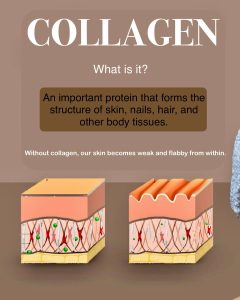
Skin collagen is a fibrous structural protein that gives the skin strength and stability. It accounts for roughly 70–75% of the skin’s dry weight, making it the most abundant protein in the skin.
The main types of collagens in skin include:
• Type I collagen – provides firmness and tensile strength
• Type III collagen – supports elasticity and repair
• Type V collagen – helps regulate collagen fiber structure
Together, these fibers form a supportive network that holds skin cells together and allows the skin to resist mechanical stress.
Skin collagen is constantly changing. Old fibers are broken down by enzymes, while new collagen is produced by fibroblasts. Healthy skin depends on balance. Aging begins when collagen loss in the skin exceeds collagen production in the skin.
How Skin Layers Interact with Collagen
Human skin is made of multiple layers. Not all layers contain collagen, but every layer influences skin collagen directly or indirectly.
The six key layers involved are:
1. Stratum corneum
2. Epidermis
3. Basement membrane
4. Papillary dermis
5. Reticular dermis
6. Subcutaneous layer
Each layer plays a different role in collagen stability, signaling, or structure.
1. Stratum Corneum: Barrier Protection for Skin Collagen
The stratum corneum is the outermost skin layer. It does not contain skin collagen, but it plays a major protective role.
Its main functions include:
• limiting water loss
• blocking UV penetration
• reducing inflammatory signals
When this barrier is damaged, enzymes that break down skin collagen become more active in deeper layers. Over-exfoliation, harsh treatments, and lack of sun protection accelerate collagen loss in skin by weakening this layer.
Protecting the stratum corneum helps slow collagen degradation, even though collagen itself is not present there.

2. Epidermis: Regulating Collagen Production in Skin
The epidermis also contains no collagen fibers, but it acts as a control center for collagen production in skin.
Epidermal cells release growth factors that signal fibroblasts in the dermis to produce new skin collagen. Healthy epidermal turnover keeps these signals active.
Key factors that support this process:
• balanced cell renewal
• controlled inflammation
• proper UV protection
When the epidermis is chronically inflamed or damaged, collagen synthesis in skin decreases, even if deeper layers are intact. This is why treatments that improve epidermal function can indirectly increase dermal collagen over time.
3. Basement Membrane: Anchoring Skin Collagen
The basement membrane connects the epidermis to the dermis. It contains specialized collagen types that anchor skin layers together and maintain structural alignment.
This layer:
• stabilizes collagen fibers in the dermis
• supports nutrient exchange
• maintains skin firmness
With aging and UV exposure, basement membrane collagen becomes thinner and more fragmented. As a result, skin collagen loses organization, contributing to wrinkles and sagging.
Procedures that stimulate controlled repair, such as microneedling, have been shown to improve basement membrane integrity and support healthier collagen structure.

4. Papillary Dermis: Early Collagen Changes
The papillary dermis is the upper dermal layer and contains a fine network of collagen fibers, mainly type III collagen.
This layer is responsible for:
• skin elasticity
• surface smoothness
• early wrinkle formation
Because the collagen fibers here are thin, they are highly sensitive to oxidative stress. Collagen loss in skin often begins in this layer, leading to fine lines and texture changes.
As aging progresses:
• type III collagen decreases
• elasticity declines
• repair slows down
Antioxidant protection and reduced inflammation help preserve collagen function in this layer.

5. Reticular Dermis: The Core of Skin Collagen Strength
The reticular dermis is the deepest dermal layer and the main reservoir of skin collagen. It contains dense bundles of type I collagen and active fibroblasts.
This layer determines:
• skin firmness
• wrinkle depth
• structural resistance
Most collagen production in skin occurs here. With age, fibroblast activity slows, blood flow decreases, and collagen synthesis declines.
Clinical treatments such as fractional lasers and radiofrequency devices target this layer because stimulating fibroblasts here leads to meaningful increases in skin collagen density.
6. Subcutaneous Layer: Supporting Skin Collagen from Below
The subcutaneous layer lies beneath the dermis and contains fat cells, connective tissue, and supporting collagen fibers.
Its role includes:
• shock absorption
• volume support
• mechanical cushioning
Loss of collagen in this layer contributes to facial volume loss and contour changes. Metabolic health, inflammation levels, and hormonal balance strongly influence collagen stability here.
Supporting overall health indirectly supports skin collagen quality at this level.
Why Skin Collagen Declines
Skin collagen declines due to a combination of internal and external factors.
Major contributors include:
• UV radiation
• smoking
• chronic inflammation
• poor sleep
• nutrient deficiencies
These factors increase oxidative stress and activate enzymes that break down skin collagen faster than it can be replaced.

How to Support Skin Collagen Scientifically
Protecting skin collagen requires a layered approach.
Effective strategies include:
• adequate protein intake for collagen building blocks
• vitamin C for collagen stabilization
• zinc and copper as enzyme cofactors
• topical retinoids to support epidermal signaling
• clinical treatments to stimulate fibroblasts
No single product can replace lost collagen. Long-term results come from supporting collagen production in skin while reducing collagen breakdown.
Conclusion
Skin collagen is not confined to one layer or one treatment. It is a multi-layer system that depends on protection, signaling, and structural support.
Understanding how skin collagen works across skin layers allows for smarter skincare decisions and more realistic expectations. Healthy skin is not about shortcuts. It is about maintaining collagen balance over time.