

The Ultimate Science-Backed Guide to 5 Skin Types – Expert Secrets for Glowing Skin | IslandBeautyR
Why Understanding Your Skin Type Changes Everything
Before you spend hundreds on skincare products, there’s one truth you need to know — your skin type defines everything. From how your face reacts to humidity, to which moisturizer actually works, your skin type is the scientific key to achieving long-term, healthy radiance. At IslandBeautyR, we believe that glowing skin isn’t luck — it’s biology understood.
Every person’s skin is unique, but dermatologists classify it into five main categories: normal, dry, oily, combination, and sensitive. Each skin type behaves differently due to factors such as sebum (oil) production, hydration levels, barrier function, and pH balance. In this guide, we’ll explore what truly defines each type — based on real dermatological science, not beauty myths — and help you finally recognize what your skin really needs.
The Science Behind Skin Types
Your skin isn’t just a surface — it’s an organ. The outermost layer, called the stratum corneum, protects your body from external stressors and prevents transepidermal water loss (TEWL)—the sebaceous glands beneath produce sebum, an oily substance that keeps your skin soft and balanced.
When this delicate balance of oil and water shifts, your skin develops its characteristic “type.” Genetics, hormones, climate, and even stress can influence how much oil your glands produce and how effectively your skin barrier retains moisture.
Dermatologists use four main parameters to determine skin type scientifically:
1. Sebum level (oiliness)
2. Hydration capacity (moisture retention)
3. Barrier integrity
4. Sensitivity and reactivity
Let’s break down each of the five types through this scientific lens.

1. Normal Skin – The Balanced Blueprint
Normal skin is what dermatologists call well-balanced, meaning sebum and moisture are in harmony. Its pH level stays around 5.5, allowing beneficial bacteria (the skin microbiome) to thrive and protect the barrier.
Scientific characteristics:
• Consistent texture with fine pores
• Minimal shine or flakiness
• Healthy barrier and low sensitivity
How to know: After cleansing, your face feels comfortable — not tight or greasy. You rarely experience breakouts or irritation.
What it means: If you have normal skin, your barrier function is optimal. Focus on maintaining hydration with lightweight humectants like glycerin or hyaluronic acid and use gentle cleansers that preserve your natural oils.
2. Dry Skin – The Lacking-Lipids Type
Dry skin isn’t just about a “lack of moisture.” Scientifically, it means your skin’s lipid barrier — made of ceramides, cholesterol, and fatty acids — doesn’t hold water efficiently. This causes transepidermal water loss (TEWL) to increase, making your skin feel rough and tight.
Scientific characteristics:
• Low sebum production
• Microscopic flaking under magnification
• Fine lines are more visible due to dehydration
How to know: After washing, your skin feels tight or itchy. Makeup may cling to dry patches.
Scientific insight: Studies show dry skin has lower levels of natural moisturizing factors (NMFs) like amino acids and urea. This makes replenishing lipids and humectants essential.
Tip from IslandBeautyR: Opt for barrier-repairing ingredients such as ceramides, squalane, and shea butter. Avoid over-exfoliation — it can worsen barrier dysfunction.
3. Oily Skin – The Sebum-Dominant Type
Oily skin results from overactive sebaceous glands, producing excess sebum. While oil protects the skin, too much of it can clog pores and feed Cutibacterium acnes, leading to breakouts.
Scientific characteristics:
• Enlarged pores, especially in the T-zone
• Noticeable shine within hours after cleansing
• Makeup tends to slide off easily
What’s happening:
Excess oil production is often driven by androgens (hormones), heat, and stress. Interestingly, research shows oily skin tends to age more slowly because oil keeps the barrier more flexible — a natural advantage!
(Oily skin often struggles with excess sebum, which can lead to congestion if not balanced properly!)
IslandBeautyR insight: Balance, don’t strip.
Use salicylic acid (BHA) to dissolve oil within pores and apply niacinamide to regulate sebum without dehydrating your skin.
4. Combination Skin – The Dual-Zone Puzzle
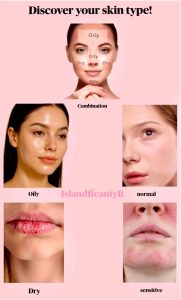
Combination skin means having more than one skin type on your face — typically oily in the T-zone (forehead, nose, chin) and dry or normal on the cheeks.
Scientific cause:
Different regions of your face have different sebaceous gland densities and microcirculation levels, so oil distribution isn’t uniform.
Signs:
• Shiny forehead and nose, but dry cheeks
• Breakouts limited to central areas
• Difficulty finding “one routine fits all.”
Dermatological advice:
Combination skin often benefits from multi-zoning — using different products on different areas. For example, apply clay masks on oily zones and hydrating serums on dry ones.
IslandBeautyr tip: Maintain PH balance and avoid harsh foaming cleansers. Look for panthenol and green tea extract — ingredients that calm oil-prone zones while hydrating dry areas.
5. Sensitive Skin – The Hyper-Reactive Type
Sensitive skin isn’t technically a “type” but a condition that can coexist with any of the above. Scientifically, it refers to an impaired barrier and over-reactive nerve endings that make your skin more prone to stinging, redness, or burning.
Scientific characteristics:
• Reduced corneocyte cohesion (cells in the outer skin layer)
• Increased nerve fiber density → more sensitivity
• Higher tendency toward inflammation and redness
How to identify:
If your skin reacts quickly to fragrance, heat, or new products, you likely have a sensitive type. Dermatologists often use stinging tests with lactic acid to confirm sensitivity clinically.
IslandBeautyR’s advice:
Stick to hypoallergenic, fragrance-free formulas. Look for Centella asiatica, allantoin, and bisabolol, which soothe without disrupting barrier function. Avoid alcohol-heavy toners or physical scrubs.
How to Identify Your Skin Type at Home (Scientifically)
You don’t need lab equipment to understand your skin — just observation and a little patience.
1. Cleanse gently with a mild, pH-balanced cleanser to remove surface oil.
2. Wait 60 minutes without applying any skincare.
3. Observe your face in natural light:
• Shiny all over → oily skin
• Tight or flaky → dry skin
• Shiny T-zone, dry cheeks → combination
• Comfortable, smooth → normal
• Burning, redness, or itchiness → sensitive
For a more scientific approach, dermatologists sometimes use a sebumeter or corneometer to measure oil and moisture levels — but your natural observation is often enough for daily care.
The Role of Genetics, Climate, and Lifestyle
Your skin type isn’t fixed forever. Research shows that genetics set your baseline, but environmental factors like temperature, humidity, and diet can shift it. For example, moving from a humid to a dry climate may turn combination skin into dry skin.
Sleep, hydration, and diet also play measurable roles in skin balance. Diets rich in omega-3 fatty acids improve the lipid barrier, while chronic stress increases cortisol, triggering excess oil and sensitivity.
At IslandBeautyR, we emphasize that understanding these triggers is as crucial as choosing the right serum. Science gives you control over your skin’s story.

Key Takeaways: Skin Science Simplified
• Normal skin → balanced sebum & hydration
• Dry skin → weak lipid barrier and high TEWL
• Oily skin → excess sebum from hormonal activity
• Combination skin → uneven oil distribution
• Sensitive skin → hyper-reactive nerves and weakened barrier
Each type is a biological signature, not a flaw. Once you understand your skin’s natural behavior, every product you use becomes more effective — because it’s chosen intelligently, not blindly.
Conclusion:
Understanding your skin type is the key to building a skincare routine that actually works. Once you know whether your skin is dry, oily, normal, combination, or sensitive, you can choose products that support your barrier, balance hydration, and improve long-term skin health. Every skin type has its own needs, and recognizing them helps you avoid irritation, save money, and get visible results faster. With the right knowledge and consistent care, healthy and naturally radiant skin becomes much easier to achieve.
Final Thoughts from IslandBeautyR
At IslandBeautyR, we believe beauty begins with understanding — not perfection. When you recognize your skin type scientifically, you empower yourself to care for it the right way. No more guessing, no more “trial and error” routines.
Glowing, confident skin isn’t just a result — it’s a reflection of self-awareness and balance.
And the science? It’s on your side.