

Antibiotics vs. Your Skin Microbiome: 7 Shocking Changes That Can Trigger Acne, Sensitivity & Premature Aging
The Invisible Damage: What Antibiotics Really Do to Your Skin
Your skin is not just skin — it is a living ecosystem. Each square centimeter hosts nearly 1 million microorganisms, forming a protective microbial shield known as the skin microbiome. This ecosystem regulates inflammation, controls acne-causing bacteria, supports immunity, and even slows visible aging.
But when antibiotics enter the picture, the balance shifts dramatically.
The relationship between antibiotics and skin microbiome health is more complex than most people realize. While antibiotics are life-saving medications, research shows they don’t just eliminate harmful bacteria — they also wipe out beneficial species that protect your skin barrier.
In fact, studies suggest that certain broad-spectrum antibiotics can reduce microbial diversity by 30–50% within days. And when microbial diversity drops, your skin becomes vulnerable to breakouts, redness, dehydration, and accelerated collagen breakdown.
Understanding how antibiotics and skin microbiome interactions work is critical — especially if you struggle with acne, sensitivity, or premature aging.
Let’s break down the 7 shocking changes happening beneath your skin.
This is islandbeautyr.com, and I am rasta kafashan, author of this website. I can help you better understand and be aware of your skin based on the most up-to-date scientific research. So, stay with us and follow islandbeautyr.com.
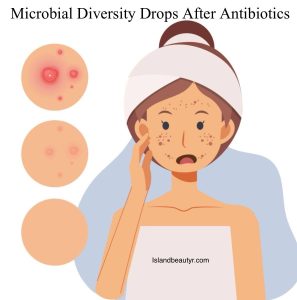
1. Loss of Microbial Diversity
Healthy skin thrives on bacterial diversity. Antibiotics often reduce protective strains such as Cutibacterium regulators while allowing opportunistic bacteria to dominate. Less diversity equals weaker defense.
Result? Increased acne flare-ups and reactive skin.
2. Barrier Function Weakening
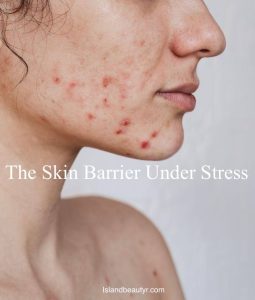
Beneficial bacteria help maintain optimal skin pH (around 4.7–5.5). When antibiotics disrupt this balance, transepidermal water loss increases, leading to dryness and sensitivity.
A disrupted barrier is one of the first consequences of poor antibiotics and skin microbiome balance.
3. Increased Inflammation Signaling
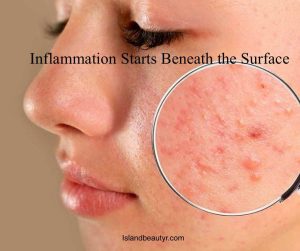
Microbiome imbalance activates inflammatory pathways like IL-1 and TNF-alpha. Chronic low-grade inflammation accelerates visible aging and collagen degradation.
4. Antibiotic Resistance Development
Repeated exposure — especially in acne treatment — encourages resistant strains of Cutibacterium acnes. This makes future treatments less effective and prolongs breakouts.
The long-term impact of antibiotics and skin microbiome resistance is a growing concern in dermatology.
5. Fungal Overgrowth
When bacterial populations decrease, fungi such as Malassezia can overgrow. This can trigger fungal acne, itching, and seborrheic dermatitis-like symptoms.
6. Slower Skin Recovery
A balanced microbiome accelerates wound healing and repair. Disruption delays recovery from acne lesions, laser treatments, and inflammation.

7. Premature Collagen Breakdown
Chronic microbiome imbalance increases oxidative stress, which contributes to collagen degradation. Over time, this may accelerate fine lines and texture changes.
The connection between antibiotics and skin microbiome disruption and premature aging is gaining more research attention every year.
How to Support Your Skin Microbiome After Antibiotics
If you’ve taken antibiotics recently:
• Use microbiome-friendly cleansers (avoid harsh sulfates)
• Incorporate prebiotics and postbiotics
• Avoid over-exfoliation
• Focus on barrier repair ingredients (ceramides, panthenol)
• Consider dermatologist-guided probiotic support
Restoring balance takes weeks — sometimes months — but recovery is possible.
Conclusion
Antibiotics are powerful medical tools. But the relationship between antibiotics and skin microbiome health cannot be ignored. Protecting your microbial diversity is essential for clear, resilient, and youthful skin.
Understanding what happens beneath the surface gives you the power to prevent acne relapses, sensitivity, and premature aging.
And in modern skincare science, microbiome balance is no longer optional — it’s foundational.
Frequently Asked Questions (FAQ)
1. How long does it take for the skin microbiome to recover after antibiotics?
Recovery time varies depending on the type and duration of antibiotic use. Research suggests that partial recovery of the skin microbiome may begin within 2–4 weeks, but full restoration of microbial diversity can take several months. The impact of antibiotics and skin microbiome disruption is often longer-lasting with repeated antibiotic courses.
2. Can antibiotics make acne worse?
Yes — in some cases. While antibiotics are commonly prescribed for acne, long-term use can disrupt the skin microbiome balance and promote resistant strains of Cutibacterium acnes. This imbalance may lead to recurring or harder-to-treat breakouts.
3. Do oral antibiotics affect the skin microbiome more than topical antibiotics?
Oral antibiotics generally have a broader systemic impact and may affect both gut and skin microbiome diversity. Topical antibiotics primarily impact the treated area but can still reduce beneficial bacterial populations. Both forms influence antibiotics and skin microbiome balance differently.
4. Can microbiome damage cause sensitive skin?
Absolutely. When beneficial bacteria are reduced, the skin barrier weakens. This increases transepidermal water loss (TEWL), inflammation, and reactivity — leading to redness, burning, and irritation.
5. Are probiotics helpful after taking antibiotics?
Emerging research suggests that probiotic, prebiotic, and postbiotic skincare ingredients may support microbiome recovery. However, results vary, and dermatologist guidance is recommended for long-term microbiome restoration after antibiotics.
6. Does microbiome disruption accelerate aging?
Chronic microbiome imbalance may increase oxidative stress and inflammatory signaling, both of which contribute to collagen breakdown and premature aging signs like fine lines and uneven texture.
7. How can I protect my skin microbiome during antibiotic treatment?
To support balance:
• Avoid harsh cleansers and over-exfoliation
• Focus on barrier-repair ingredients (ceramides, panthenol)
• Use gentle, pH-balanced skincare
• Limit unnecessary antibacterial products
Maintaining awareness of antibiotics and skin microbiome interactions is key to preventing long-term damage.