

Smart Acne Repair Protocol – 8 Clinically Recognized Types of Acne
Acne is more than just pimples.
It is a chronic inflammatory skin condition affecting millions worldwide.
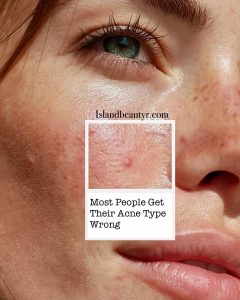
Many people struggle because they misidentify their acne type.
Wrong assumptions lead to improper care, prolonged breakouts, and even scarring.
Understanding acne correctly is the first step toward healthy, clear skin.
The Smart Acne Repair Protocol is a science-backed framework that emphasizes accurate identification of acne types before any treatment or skin intervention.
It is not about miracle creams or quick fixes.
It is about understanding how your skin behaves, what triggers each acne type, and the biological mechanisms behind them.
Acne develops from a combination of four key factors:
1. Excess sebum production
2. Abnormal keratinization (clogged pores)
3. Overgrowth of Cutibacterium acnes bacteria
4. Inflammation
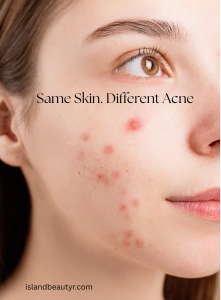
However, not all acne looks the same.
Recognizing the exact type is critical for both prevention and management.
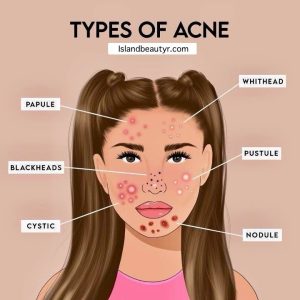
The Smart Acne Repair Protocol classifies acne into 8 clinically recognized types, each with unique features, causes, and biological mechanisms.
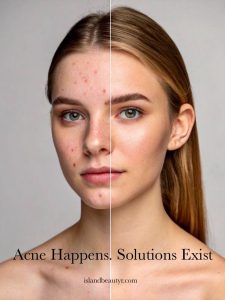
By following this protocol, you can avoid common mistakes, reduce inflammation, and prevent long-term skin damage.
In this guide, we will explore these 8 types in detail.
You will learn how to identify them, why they appear, and what science says about their differences.
No myths. No guesswork.
Just evidence-backed knowledge that empowers your skin care routine.
This is islandbeautyr.com, and I am rasta kafashan, author of this website. I can help you better understand and be aware of your skin based on the most up-to-date scientific research. So, stay with us and follow islandbeautyr.com.
1. Comedonal Acne (Blackheads & Whiteheads)
Key Features:
• Non-inflammatory
• Blackheads (open comedones) and whiteheads (closed comedones)
• Common on the forehead, nose, and chin
Scientific Basis:
Comedonal acne forms due to excess sebum and abnormal keratinization.
Sebum mixes with dead skin cells, blocking hair follicles.
Blackheads are exposed to air and oxidize; whiteheads remain under the skin.
Smart Acne Repair Protocol Tip:
Identify comedones early.
Avoid over-exfoliation, which can worsen skin barrier damage.
Salicylic acid (BHA) can safely unclog pores without irritation.
2. Papular Acne
Key Features:
• Small, red, raised bumps
• Inflamed but not pus-filled
• Sensitive to touch
Scientific Basis:
Papules result from an immune response to bacterial overgrowth.
Inflammation occurs around blocked follicles.
Smart Acne Repair Protocol Tip:
Gentle anti-inflammatory skincare is essential.
Niacinamide and low-concentration retinoids reduce inflammation without harming skin.
3. Pustular Acne
Key Features:
• Red bumps with visible pus
• Can appear on face, chest, or back
• Painful if squeezed
Scientific Basis:
Pustules occur when bacterial overgrowth triggers immune cells to produce pus.
The surrounding tissue is inflamed.
Smart Acne Repair Protocol Tip:
Avoid popping.
Use benzoyl peroxide in low concentration to reduce bacterial load safely.
4. Nodular Acne
Key Features:
• Large, firm, painful lumps
• Deep in the skin
• High risk of scarring
Scientific Basis:
Severe inflammation in the sebaceous glands.
Hormonal imbalances can exacerbate nodular acne.
Smart Acne Repair Protocol Tip:
Professional assessment recommended.
Topical treatment alone may not suffice.
Focus on barrier support and anti-inflammatory ingredients.
5. Cystic Acne
Key Features:
• Soft, pus-filled cysts
• Extremely painful
• Often leaves scars
Scientific Basis:
Deep follicular inflammation.
Immune response to bacterial overgrowth is intense.
Smart Acne Repair Protocol Tip:
Dermatologist-prescribed therapy required.
Long-term barrier repair is critical to prevent scarring.
6. Acne Conglobata
Key Features:
• Severe, nodular-cystic lesions
• Can affect the trunk and face
• Chronic and recurrent
Scientific Basis:
Extreme inflammatory response.
Often linked to hormonal or genetic factors.
Smart Acne Repair Protocol Tip:
Medical intervention essential.
Understanding triggers and lifestyle factors improves long-term management.
7. Hormonal Acne
Key Features:
• Breakouts on jawline, chin, and neck
• Cyclical in nature (especially in women)
• Often appears in adulthood
Scientific Basis:
Caused by androgen sensitivity in the sebaceous glands.
Hormonal fluctuations drive sebum production.
Smart Acne Repair Protocol Tip:
Track hormonal cycles.
Lifestyle adjustments and topical or systemic anti-androgens may help.
8. Adult Acne
Key Features:
• Persists beyond teenage years
• Often mild to moderate
• Linked to stress, diet, and lifestyle
Scientific Basis:
A combination of chronic inflammation, stress hormones, and environmental factors.
Smart Acne Repair Protocol Tip:
Maintain consistent skincare.
Incorporate anti-inflammatory and barrier-repair ingredients.
Stress management improves outcomes.
Conclusion
The Smart Acne Repair Protocol emphasizes understanding over guessing.
By recognizing the 8 clinically recognized types of acne, you can:
• Identify your acne correctly
• Avoid common mistakes
• Protect your skin barrier
• Reduce inflammation and scarring
Knowledge is the first step toward healthy, clear skin.
This protocol is not about quick fixes.
It is about scientifically informed care.