
12 Powerful Facts About Sugar and Skin Aging | IslandBeautyR Scientific Anti-Aging Guide
If achieving youthful, glowing, and firm skin is one of your long-term beauty goals, understanding the connection between sugar and skin aging is essential. Most people still believe that aging comes mainly from UV rays, stress, or genetics. But recent dermatology and biochemistry research shows a much deeper—and far more surprising—truth: the link between sugar and skin aging is one of the strongest internal drivers of premature aging.
The impact isn’t just superficial. Every time sugar enters your bloodstream, it initiates a chain of biochemical reactions that directly influence your skin’s collagen, elastin, texture, firmness, and ability to repair itself. This internal aging process includes glycation, collagen fragmentation, oxidative stress, hormonal imbalance, inflammation, and a weakened skin barrier. Because of these mechanisms, many dermatologists now refer to sugar as “the internal UV radiation” of the skin.
What makes sugar and skin aging even more dangerous is that the damage starts long before visible wrinkles appear. The earliest signs often include dullness, uneven texture, increased oiliness, inflammation, loss of elasticity, and slower skin renewal. And since sugar is hidden in almost everything—from sauces and dressings to snacks and drinks—most people are accelerating their skin aging without ever realizing the cause.
In this exclusive IslandBeautyR scientific guide, you’ll learn 12 shockingly powerful, research-backed facts explaining exactly how sugar accelerates skin aging—and how reducing your sugar intake can dramatically improve your skin’s youthfulness and health.
This is islandbeautyr.com, and I am rasta kafashan, author of this website. I can help you better understand and be aware of your skin based on the most up-to-date scientific research. So, stay with us and follow islandbeautyr.com.
1. Glycation: The Core Mechanism Behind Sugar and Skin Aging
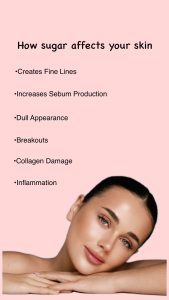
Glycation is the primary biochemical reaction linking sugar and skin aging. It happens when sugar binds to structural proteins like collagen and elastin, forming AGEs (Advanced Glycation End Products). These toxic molecules stiffen the skin, weaken its integrity, and speed up aging from within.
Glycation causes:
• premature wrinkles
• loss of firmness
• dull and uneven skin tone
• visible sagging
It’s impossible to fight aging without addressing glycation, making it the most important element in understanding sugar and skin aging.
2. Sugar Breaks Down Collagen Faster Than UV Rays
Most people think UV exposure is the top cause of aging, but sugar can degrade collagen even faster. When sugar interacts with collagen fibers, it makes them brittle, fragmented, and weak.
More sugar = less collagen = faster aging.
This is one of the most overlooked yet powerful aspects of sugar and skin aging.

3. Sugar Makes the Skin More Sensitive to UV Damage
Sugar weakens the skin’s antioxidant defenses. Lower antioxidant capacity means UV rays cause more DNA damage, inflammation, and pigmentation.
This creates a destructive cycle where sugar and skin aging intensify each other.
4. Sugar Damages Elastin and Causes Sagging
Elastin is what keeps the skin lifted and youthful.
AGEs attack elastin fibers, reducing elasticity and causing sagging cheeks, droopy eyelids, and a weaker jawline.
This sagging is one of the clearest visual signs of sugar and skin aging.
5. Sugar Triggers Chronic Inflammation Inside the Skin
High sugar intake elevates inflammatory cytokines.
Chronic inflammation slowly destroys collagen, increases redness, worsens acne, and accelerates every stage of aging.
This inflammatory cycle is a major reason sugar and skin aging are so closely connected.
6. Sugar Disrupts Hormones and Accelerates Oil Production
Sugar spikes insulin, which directly increases sebum production.
More sebum = more acne + more inflammation = more long-term damage.
Hormonal imbalance also weakens the skin barrier and speeds up wrinkle formation.
This mechanism plays a significant role in sugar and skin aging, especially in younger individuals.
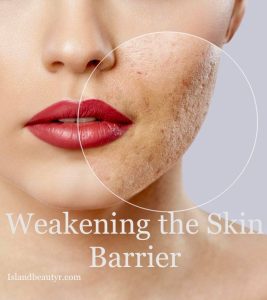
7. Sugar Weakens the Skin Barrier
The skin barrier protects against dehydration and external stress.
Sugar weakens this barrier by breaking down lipids and increasing inflammation.
A compromised barrier = dryness, irritation, sensitivity, and accelerated aging.
It’s one of the earliest subtle symptoms of sugar and skin aging.
8. Sugar Slows Down Skin Cell Regeneration
Healthy skin renews itself approximately every 28 days.
High sugar intake slows this regeneration cycle, leading to:
• dullness
• rough texture
• uneven tone
This delay in renewal amplifies the visible impact of sugar and skin aging.
9. Sugar Increases Sebum and Long-Term Skin Damage
Excess insulin from sugar spikes causes excessive oil production.
This results in more breakouts, deeper inflammation, and post-acne scars—all contributing to premature aging.
Over time, this cycle becomes a major player in sugar and skin aging.
10. Sugar Intensifies Oxidative Stress
Sugar increases free radicals inside the skin, overwhelming its natural defense mechanisms.
These free radicals attack collagen and elastin, accelerating aging and reducing skin firmness.
Oxidative stress is one of the central pillars of sugar and skin aging.
11. Sugar Slows the Skin’s Repair System
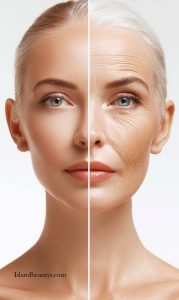
When sugar levels are high, the body struggles to repair daily damage caused by UV exposure, pollution, and inflammation.
This leads to slower healing, deeper lines, and longer-lasting discoloration.
A delayed repair system is one of the most dangerous consequences of sugar and skin aging.
12. Sugar Reduces New Collagen Production Over Time
Sugar doesn’t just destroy collagen—it also slows the production of new collagen.
This double impact accelerates aging dramatically.
This is why sugar and skin aging are considered one of the most harmful internal aging pathways in dermatology.

Conclusion:
Understanding Sugar and Skin Aging Is the First Step Toward Youthful Skin
The science is undeniable: the connection between sugar and skin aging is powerful, real, and backed by decades of dermatology and biochemistry research. But the good news is that this damage is largely reversible. Reducing your sugar intake can significantly improve collagen quality, restore elasticity, brighten your skin tone, reduce inflammation, and enhance overall skin youthfulness.
If you’re serious about anti-aging, mastering the science behind sugar and skin aging is one of the most transformative steps you can take—and IslandBeautyR is here to guide you scientifically every step of the way.